

If you had told me five years ago that my face would be my credit card, my house key, and my office ID all at once, I probably would’ve checked to see if you’d been watching too much sci-fi.
But here we are in 2026, and facial recognition has moved way beyond just unlocking our phones. It’s becoming the invisible glue of our daily lives.
I’ve been tracking the latest jumps in this tech, and honestly, the latest developments aren’t just about faster scanning—they’re about deeper understanding. Here is what’s actually happening right now.
1. From 2D Pixels to 3D Depth
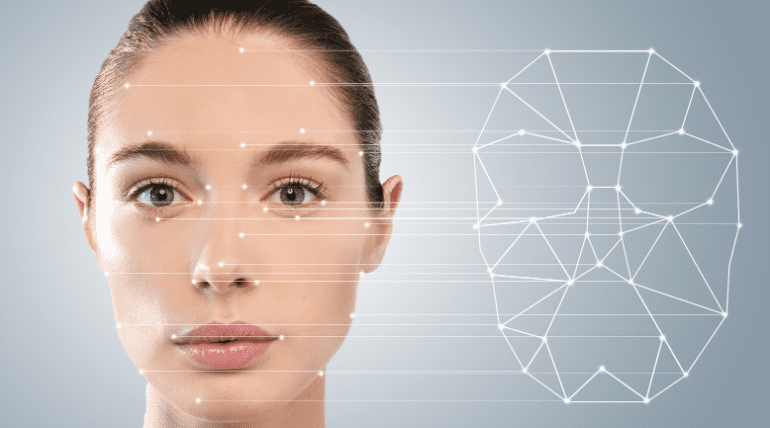
We’ve officially moved past the era where a high-res photo could trick a security camera. The big shift in 2026 is the mainstreaming of 3D Facial Mapping. Instead of just looking at the distance between your eyes, systems now project thousands of invisible dots to create a topographical map of your face.
This means the tech can recognize you from side angles, in crappy lighting, or even if you’ve grown a vacation beard. It’s also the ultimate deepfake killer; because the system looks for depth and liveliness, it can tell the difference between a real human and a 2D screen or a mask.
2. Emotional AI: Reading the Room
This is where things get a little Black Mirror. We’re seeing a massive rise in Emotion AI. Retailers and customer service hubs are starting to use software that doesn’t just know who you are, but how you feel.
If you’re standing in front of a digital kiosk and you look frustrated, the AI can actually pivot its tone or call over a human staff member before you even say a word. In cars, this tech is a lifesaver—monitoring drivers for signs of fatigue or road rage and suggesting a break. It’s less about surveillance and more about contextual empathy.
3. The Edge Revolution and Privacy
One of the biggest complaints used to be: “Where is my face data going?” In 2026, the answer is increasingly: nowhere. Thanks to Edge Computing, most of the heavy lifting is now done directly on the device (like your smart doorbell or laptop) rather than being sent to a giant cloud server. This privacy-by-design approach means your bio-metric data stays local, making it way harder for hackers to scoop up a database of millions of faces.
4. Navigating the New Rules
We can’t talk about 2026 without mentioning the law. With the EU AI Act and several new U.S. state laws fully hitting their stride this year, the Wild West days of facial recognition are ending. Companies now have to be incredibly transparent about when they’re scanning you.
We’re seeing a shift toward Opt-in Bio-metrics. You might use your face to breeze through airport security or pay for coffee, but it’s becoming a choice you make for convenience, rather than something happening behind your back in every dark corner.
The Bottom Line
Facial recognition in 2026 is less about Big Brother and more about a Seamless World. Whether it’s helping doctors diagnose rare genetic conditions through facial symmetry or just making sure I don’t have to carry a physical wallet, the tech is finally growing up.