Blog

News & stuff

Everything announced at MWC 2026: The new Leica Leitzphone by Xiaomi, Honor’s ultra-thin MagicPad 4 and more

MWC 2026 officially gets underway on March 2 and will continue through March 5, but the announcements are already coming ahead of its start. We can always count on the annual tech event to bring tons of new phones, laptops and tablets, and we're expecting to see some robots and other gadgets too — plus plenty of AI news, of course. In addition to the announcements, MWC is our chance to get hands-on time with some of the most interesting new devices, like the Xiaomi 17 Ultra.

Engadget’s Mat Smith is on the ground in Barcelona, and we'll be updating this story as the week goes on to keep you in the loop on everything that caught our attention. Keep checking back here for the latest MWC news. 

Mat Smith for Engadget

Xiaomi kicked off MWC this year by announcing the global launch of its 17 Ultra smartphone, which debuted first in China back in December. It's unclear if the phone will ever come to the US, but it's now rolling out in Europe. Xiaomi teamed up again with Leica to make a photography-focused smartphone, and the 17 Ultra sports a 1-inch 50-megapixel camera sensor with a f/1.67 lens, a telephoto setup with a 200MP 1/1.4-inch sensor, and a 50MP ultrawide camera. There's also a manual zoom ring around the camera. 

Check out our hands on for our first impressions of what it's like shooting with the Xiaomi 17 Ultra. And there's more to it than just the camera. The 17 Ultra has a 6.9-inch OLED 120 Hz display that peaks at 3,500 nits of brightness, and a 6000mAh silicon-carbon battery. The Xiaomi 17 Ultra starts at £1,299 (roughly $1,750).

Leica also announced a new phone made in partnership with Xiaomi at MWC. It looks a whole lot like Xiaomi's 17 Ultra, but isn't the 17 Ultra, exactly.
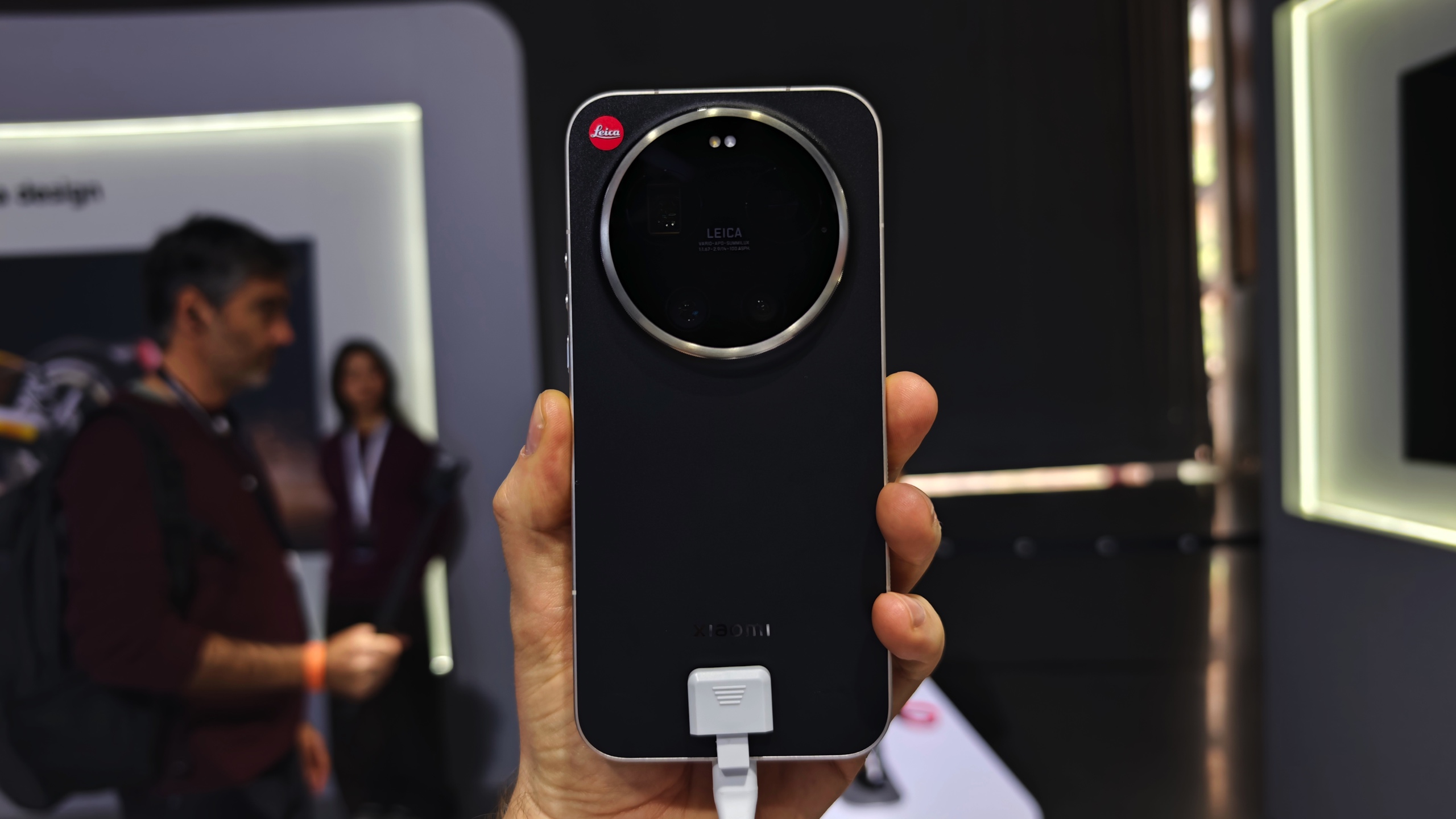
Leica Leitzphone by Xiaomi hands-on at MWC 2026§
Leica Leitzphone by Xiaomi hands-on at MWC 2026
Image by Mat Smith for Engadget

Like the 17 Ultra, Leica's Leitzphone by Xiaomi has a 1-inch camera sensor and physical controls for zoom and other settings, using a mechanical ring around the camera unit. It features a Leica-designed intuitive camera interface with the option to show just the essentials when you're shooting, hiding all the modes and labels. There's a monochrome shooting mode and Leica filters. 

The Leica branding is splashed all over it in design and wallpapers, but it's otherwise pretty similar to the 17 Ultra, with the same specs. Like the 17 Ultra, it has a Snapdragon 8 Elite Gen 5 chip and a 6.9-inch 120Hz display. This one's priced at €1,999 (roughly $2,362).
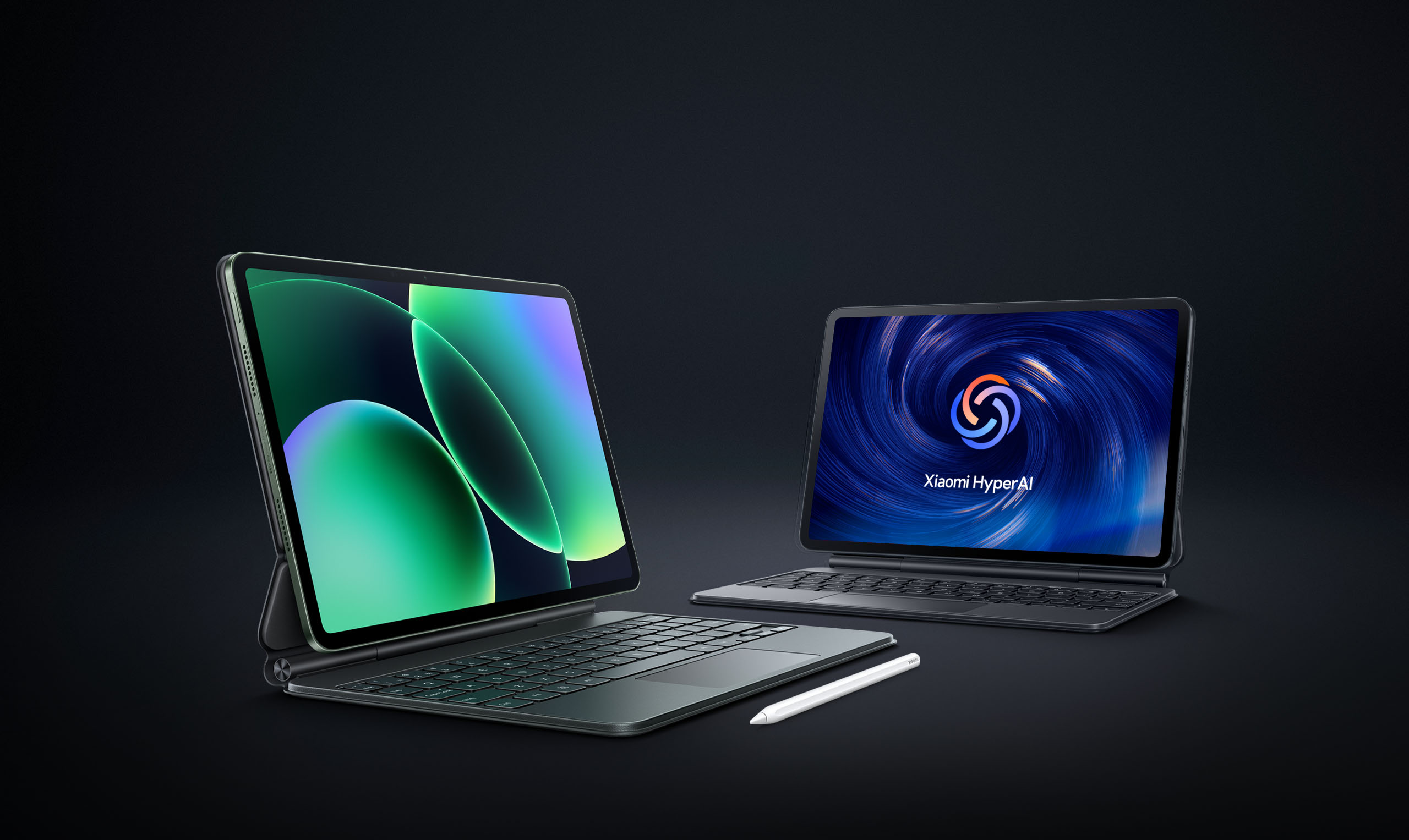
The Xiaomi Pad 8 Pro
Xiaomi

In addition to the 17 Ultra, Xiaomi announced two new tablets at MWC this year: the Xiaomi Pad 8 and Xiaomi Pad 8 Pro. There's nothing revolutionary here, but they're lightweight and thin, with both being 5.75mm thick and weighing 485g, and have a 9200mAh battery. The Pro model is powered by a Snapdragon 8 Elite chip, while the regular Pad 8 uses the Snapdragon 8s Gen 4 chipset. 

Xiaomi also unveiled a new 5000mAh powerbank, the UltraThin Magnetic Power Bank 5000 15W. The 6mm thick power bank comes in three colors with an aluminum alloy shell: orange, silver and charcoal gray. Along with that, the company introduced the Xiaomi Tag, its own take on the Bluetooth item tracker. The Xiaomi Tag has a built-in hanging loop so it can be attached directly to a keyring, and the company says it will work with both Apple Find My and Google's Find Hub for Android.

Honor

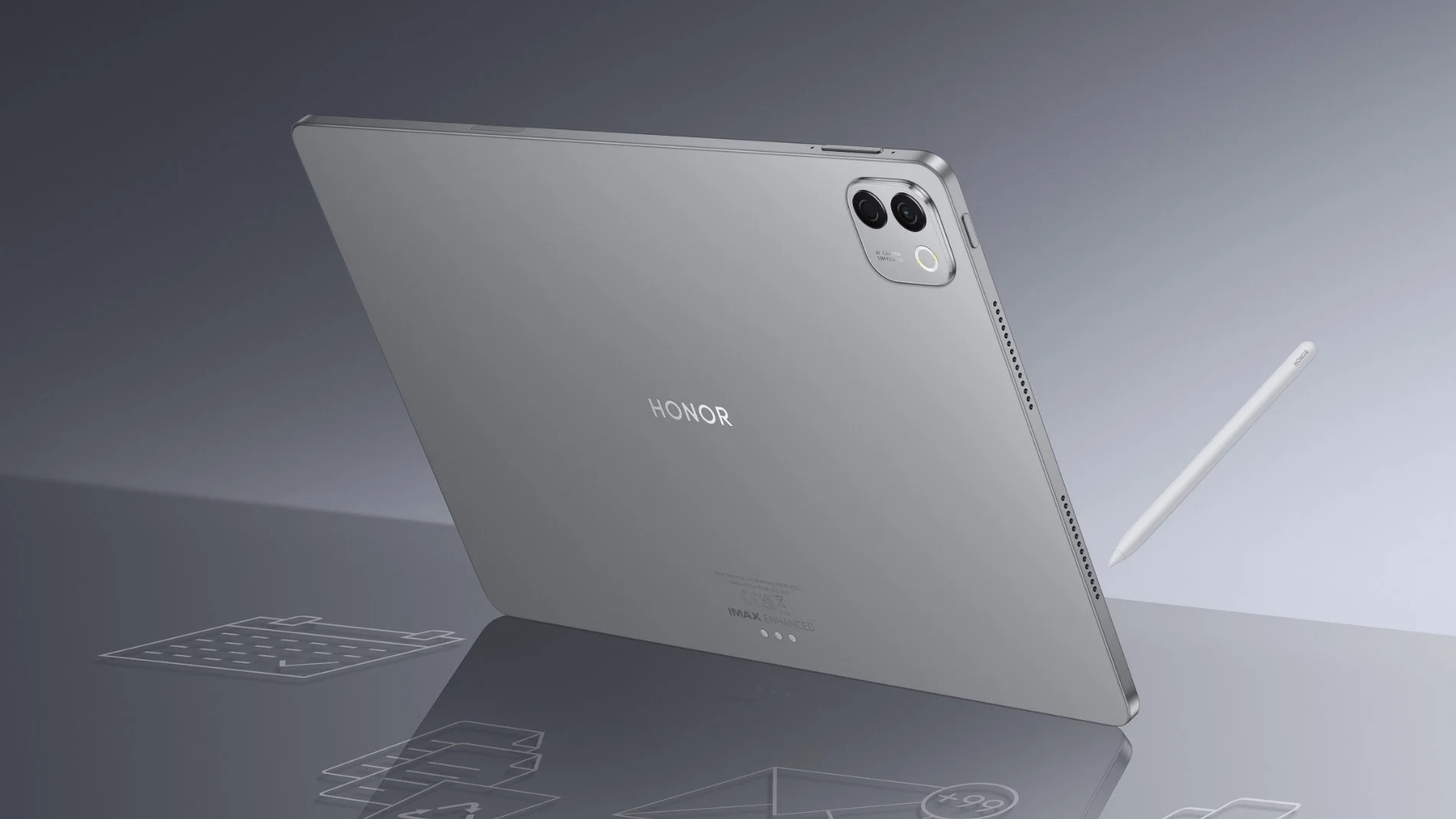
Ahead of MWC, Honor announced what it claims is the thinnest Android tablet in the world: the 4.8mm thick MagicPad 4. We're expecting to hear more about this at Honor's press conference on Sunday, but so far we know it features a 12.3-inch 165Hz OLED display and weighs just 450g. It comes with up to 16GB of RAM and 512GB of storage, and is powered by Qualcomm's Snapdragon 8 Gen 5 chipset. The thinness doesn't count the camera bump, Honor notes. The MagicPad 4 has 13MP rear and 9MP front cameras. It also boasts spatial audio, with eight speakers.

Just as the display is slightly smaller than the previous MagicPad, the MagicPad 4 has a smaller battery at 10100 mAh. It comes with a 66W fast charger. The MagicPad 4 will run Honor's MagicOS 10. We don't yet know how much it will cost, but we'll update this after Honor's press conference (where we're also expecting to see the company's robot) with any new details.  

Tecno

We can always expect to see some wild phone concepts at MWC, and this year we're starting with one from Tecno. The company unveiled a modular concept smartphone design that can be as thin as 4.9mm in its base configuration. There’d be 10 modules to choose from based on the announcement, including various camera lenses, a gaming attachment and a power bank, relying on magnets to keep it all together — or Modular Magnetic Interconnection Technology, as Tecno is calling it. 

This article originally appeared on Engadget at https://www.engadget.com/mobile/everything-announced-at-mwc-2026-the-new-leica-leitzphone-by-xiaomi-honors-ultra-thin-magicpad-4-and-more-172442426.html?src=rss

Alaska could be the next state to crack down on AI-generated CSAM and restrict kids’ social media use

Alaska's House of Representatives unanimously passed HB47, a bill that imposes sweeping limits on when and how minors use social media apps, along with bans on generating or distributing harmful deepfakes of children.

The bill's original form was focused on prohibiting the possession and distribution of sexually explicit images of children using AI, but Alaska lawmakers decided to add amendments that would impose social media restrictions. The proposed limitations include a statewide curfew on using social media between 10:30 PM and 6:30 AM, banning "addictive design features" and requiring social media platforms to verify user ages and get parental consent if they are minors.

While the House bill saw 39 votes in favor and zero against, the amendments offered some hints at potential upcoming revisions. Before the bill went to a vote, some of the House representatives expressed concern about adding such broad rules on social media without consulting the companies behind them first.

The bill still has to make its way through the Alaska State Senate, which already has presented a companion bill, and the governor. Alaska is following the footsteps of many other states, and the House even modeled its social media amendments in the HB47 bill after Utah. While Utah was the first to propose social media restrictions for kids, it was later met with a preliminary injunction.

This article originally appeared on Engadget at https://www.engadget.com/social-media/alaska-could-be-the-next-state-to-crack-down-on-ai-generated-csam-and-restrict-kids-social-media-use-190506366.html?src=rss

Shuttered studio Bluepoint reportedly pitched a Bloodborne remake, but it got shot down by FromSoftware

Bloodborne fans may not be happy to hear that a remake was reportedly rejected, but that doesn't mean it's completely off the table. Bluepoint Games, Sony's closed-down studio behind many PlayStation remakes, pitched remaking the classic Gothic horror RPG in early 2025, but was blocked by the game's developer, FromSoftware, according to a Bloomberg report.

As Bloomberg reported, Bluepoint pitched a Bloodborne remake after several years of working towards a live-service title in the God of War franchise that was ultimately canceled. Looking for the next project, a modern-day version of Bloodborne made a lot of sense, considering the title came out in 2015 and Bluepoint was responsible for the successful Demon's Souls remake in 2020. However, Bloomberg's sources said that FromSoftware was against it, but didn't offer a concrete reason why. With some digging, Bloomberg's Jason Schreier pointed to an interview from Kinda Funny Games with PlayStation exec Shuhei Yoshida, which aired last year. In the video, Yoshida mentioned that FromSoftware's president, Hidetaka Miyazaki, wanted to pursue a Bloodborne remake, but was too busy to do it himself and "doesn't want anyone else to touch it."

After failing to get the Bloodborne remake greenlit, Bluepoint wasn't able to secure another project for more than a year, according to the Bloomberg report. Now that Bluepoint has been shut down, we're likely even further away from a remake. That's not to say a remake will never happen, but when it does, it'll have to get a stamp of approval and likely a lot of oversight from FromSoftware.

This article originally appeared on Engadget at https://www.engadget.com/gaming/playstation/shuttered-studio-bluepoint-reportedly-pitched-a-bloodborne-remake-but-it-got-shot-down-by-fromsoftware-173744228.html?src=rss

Leica’s Leitzphone by Xiaomi has a huge 1-inch camera sensor and a stylish new design

Alongside a global launch for Xiaomi's 17 Ultra (read about that right here), the company announced a further deepening of its relationship with Leica. The CEO of Leica, Matthias Harsch, took to the stage to announce a new Leitzphone, which appears to be an even deeper collaboration than 17 Ultra by Leica, which is a different phone. Confused? That's fair. 

Design-wise, Leica has shifted back to a single tone body color, which looks more "Leica" to this camera dilettante's eyes. And if you’re thinking you’ve heard of the Leitzphone before, you probably have: it was a series of phones made by Sharp that launched in Japan in 2021. They all had a 1-inch camera sensor, as does Xiaomi’s first Leitzphone. It also has a mechanical, physical ring dial around the camera unit to control settings like zoom, exposure and shutter speed.

The camera interface is also designed by Leica. It's designed to be as intuitive as possible, with an Essential mode in the camera app that strips away all those modes and labels, showcasing whatever you're looking to shoot. You can switch between a monochrome shooting mode and a more familiar punchy, contrasty Leica filter. And that's it.

Aside from that there's no major standout interface or UI changes that I could spot while trying out the Leitzphone briefly at Xiaomi's MWC keynote. However, if you're intrigued by the functionality — or the cameras — check out our hands-on coverage and sample photos of the Xiaomi 17 Ultra. The cameras are good.

Leica Leitzphone by Xiaomi hands-on at MWC 2026§
Image by Mat Smith for Engadget

All three iterations (the regular Xiaomi 17 Ultra , the "by Leica" edition and the Leitzphone) have a Snapdragon 8 Elite Gen 5 chip and a 6.9-inch 120Hz display that can reach up to 3,500 nits of peak brightness. While cameras are naturally the focus, it’s a flagship device by pretty much any metric. It also has a 6,000mAh battery for extended vacation photo shoots.

Barring some Leica-tinged wallpapers and design accents, it's a lot like the 17 Ultra by Leica, just with different messaging. This is Leica's phone, made by Xiaomi, but does a rose by any other name still have great low-light photography? Maybe increased Leica branding will be enough to coax its camera fans into making this their next smartphone, perhaps.

Leica Leitzphone by Xiaomi hands-on at MWC 2026§
Image by Mat Smith for Engadget

After years of collaboration (and cute little badges), this may be the first pure "Leica phone" manufactured by Xiaomi but sold directly by both companies. It's priced at €1,999 (roughly $2,362), but it's not known yet whether this phone will launch in the US. Welcome to MWC, everyone.

This article originally appeared on Engadget at https://www.engadget.com/mobile/smartphones/leica-leitzphone-xiaomi-mwc-2026-135744417.html?src=rss

Trump orders federal agencies to drop Anthropic services amid Pentagon feud

President Donald Trump has ordered all US government agencies to stop using Claude and other Anthropic services, escalating an already volatile feud between the Department of Defense and company over AI safeguards. Taking to Truth Social on Friday afternoon, the president said there would be a six-month phase out period for federal agencies, including the Defense Department, to migrate off of Anthropic's products. 

“The Leftwing nut jobs at Anthropic have made a DISASTROUS MISTAKE trying to STRONG-ARM the Department of War, and force them to obey their Terms of Service instead of our Constitution,” the president wrote. “Anthropic better get their act together, and be helpful during this phase out period, or I will use the Full Power of the Presidency to make them comply, with major civil and criminal consequences to follow.”  

Before today, US Defense Secretary Pete Hegseth had threatened to label Anthropic a “supply chain risk” if it did not agree to withdraw safeguards that insist Claude not be used for mass surveillance against Americans or in fully autonomous weapons. In a post on X published after President Trump’s statement, Hegseth said he was “directing the Department of War to designate Anthropic a Supply-Chain Risk to National Security. Effective immediately, no contractor, supplier, or partner that does business with the United States military may conduct any commercial activity with Anthropic.”

Anthropic did not immediately respond to Engadget's comment request. Earlier in the day, a spokesperson for the company said the contract Anthropic received after CEO Dario Amodei outlined Anthropic's position made “virtually no progress” on preventing the outlined misuses.

"New language framed as a compromise was paired with legalese that would allow those safeguards to be disregarded at will. Despite DOW's recent public statements, these narrow safeguards have been the crux of our negotiations for months," the spokesperson said. "We remain ready to continue talks and committed to operational continuity for the Department and America's warfighters." 

Advocacy groups like the Center for Democracy and Technology (CDT) quickly came out against the president’s threats. “This action sets a dangerous precedent. It chills private companies’ ability to engage frankly with the government about appropriate uses of their technology, which is especially important in national security settings that so often have reduced public visibility,” said CDT President and CEO Alexandra Givens, in a statement shared with Engadget. “These threats undermine the integrity of the innovation ecosystem, distort market incentives and normalize an expansive view of executive power that should worry Americans all across the political spectrum.”

For now, it appears the AI industry is united behind Anthropic. On Friday, hundreds of Google and OpenAI employees signed an open letter urging their companies to stand in "solidarity" with the lab. According to an internal memo seen by Axios, OpenAI CEO Sam Altman said the ChatGPT maker would draw the same red line as Anthropic.  

In a blog post published late on Friday, Anthropic vowed to “challenge any supply chain risk designation in court,” and assured its customers that only work related to the Defense Department would be affected. The company's full statement is available here, an excerpt is below:

Designating Anthropic as a supply chain risk would be an unprecedented action—one historically reserved for US adversaries, never before publicly applied to an American company. We are deeply saddened by these developments. As the first frontier AI company to deploy models in the US government’s classified networks, Anthropic has supported American warfighters since June 2024 and has every intention of continuing to do so.

We believe this designation would both be legally unsound and set a dangerous precedent for any American company that negotiates with the government.

No amount of intimidation or punishment from the Department of War will change our position on mass domestic surveillance or fully autonomous weapons. We will challenge any supply chain risk designation in court.

Update, February 27, 9PM ET: This story was updated twice after publish. First at 6PM ET to include a link to and quotes from Hegseth about the designation of Anthropic as a supply chain risk. Later, a quote from Anthropic was added, along with a link to the company’s blog post on the subject.

This article originally appeared on Engadget at https://www.engadget.com/ai/trump-orders-federal-agencies-to-drop-anthropic-services-amid-pentagon-feud-222029306.html?src=rss

Popular articles

Bumble’s AI Assistant Bee Wants to Replace Endless Swiping

The dating app says it will launch "chapter-based profiles" and a personal dating assistant.

How to watch Jensen Huang’s Nvidia GTC 2026 keynote

GTC — which stands for GPU Technology Conference — is Nvidia's flagship annual event, where the chipmaker typically uses the spotlight to announce new products, champion partnerships, and lay out its vision for the future of computing. Huang's keynote will focus on Nvidia's role in the future of computing and AI.

AT&T Revamps Its Unlimited Plans With Simpler Names and More Data

Slapping a 2.0 version number on plans makes them sound new, but what's actually changed? Let's check the details.

Sales automation startup Rox AI hits $1.2B valuation, sources say

Rox, founded in 2024 by the former chief growth officer of New Relic, offers an AI-native alternative to CRM tools.

New Sassy Personality Style for Alexa Plus Brings Sarcasm and Swear Words

The new Sassy style is adults-only with a bit of profanity and a double dose of cringe.

Case Studies

Content & copywriting

Compass Music Platform

A clothing brand wanted to launch a new e-commerce website that would allow customers to browse and purchase their products online. We developed a...
Content & copywriting

NewsWeek Magazine

A clothing brand wanted to launch a new e-commerce website that would allow customers to browse and purchase their products online. We developed a...
E-commerce development

Beauty & Makeup Shop

A clothing brand wanted to launch a new e-commerce website that would allow customers to browse and purchase their products online. We developed a...