

Author
Everything announced at Samsung Unpacked: The Galaxy S26 Ultra, Galaxy Buds 4 and more
Mobile World Congress is right around the corner, but Samsung got out ahead of many rivals that will be showing off new handsets at that event by running the latest edition of Unpacked on Wednesday. At its event in San Francisco’s Palace of Fine Arts, the company revealed the Galaxy S26 lineup, which includes the base S26, the S26+ and the S26 Ultra. We've got some hands-on time with all three handsets as well, and you can read about our in-person experience with the Galaxy S26 Ultra, as well as our S26 and S26+ impressions in those articles.
In addition to those, Samsung announced the Galaxy Buds 4 along with (you guessed it) some AI updates. All the devices unveiled today are already available for pre-order, should you already be dying to get your hands on them. Here's a look at everything Samsung announced at the latest Unpacked:
Galaxy S26 and S26+
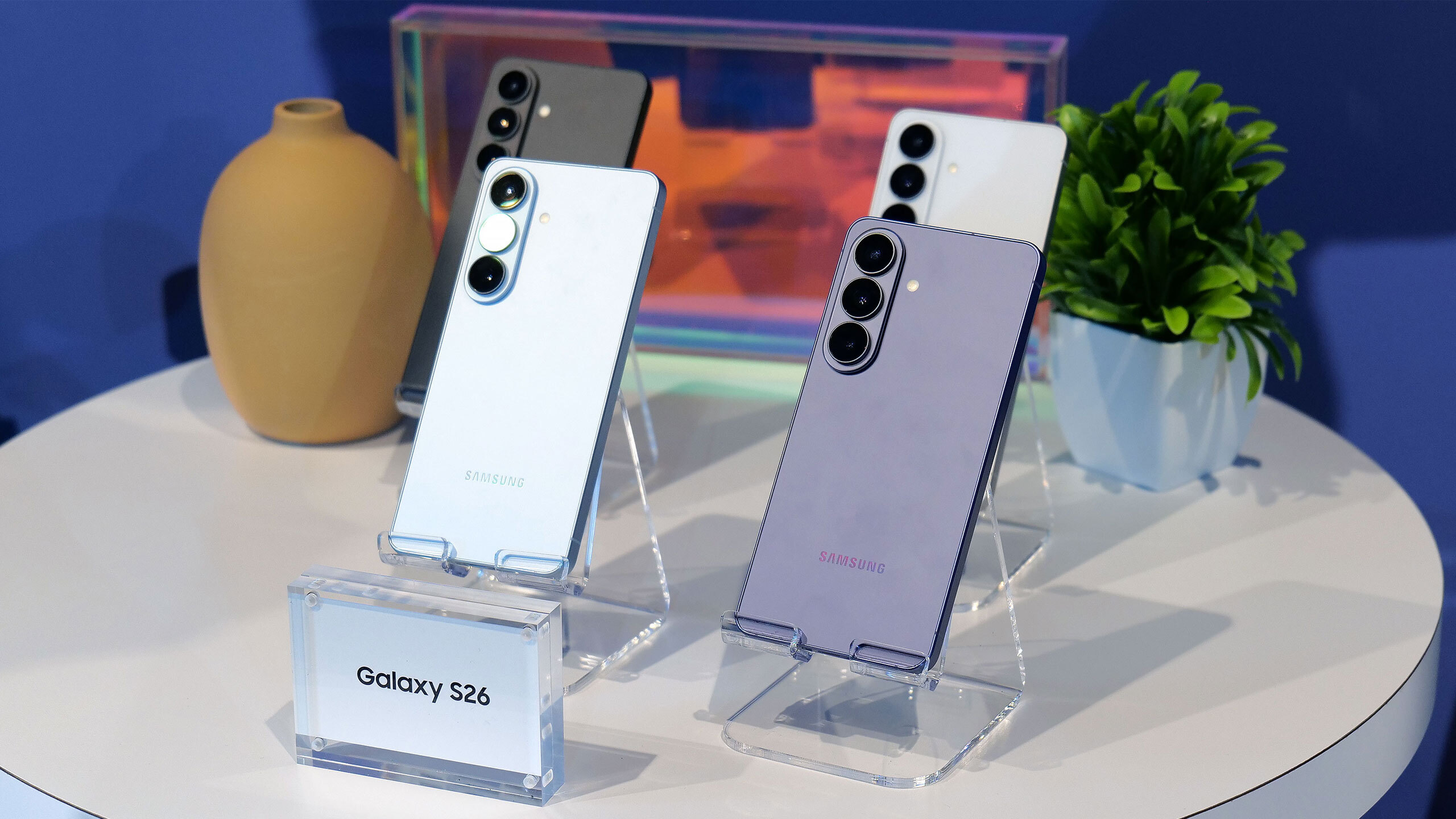
New-ish year, new Samsung phones. Let's deal with the out-and-out bad news first. The S26 and S26+ are each $100 more expensive than their predecessors (the RAM shortage isn't exactly helping to keep prices down). They start at $900 and $1,100, respectively, for variants with 256GB of storage.
Samsung has tweaked the design a bit this time by rounding the corners to align them more with the S26 Ultra's look. The base model has a slightly larger display than the S25 at 6.3 inches, though the S26+ still has a 6.7-inch screen (albeit with a higher resolution than the S26 can handle). The S26 has a larger battery capacity than the S25 too at 4,300mAh.
In North America, China and Japan, Samsung is sticking with Qualcomm chips rather than using its own Exynos 2600. If you pick up an S26 or S26+ in those markets, it will run on the Snapdragon 8 Elite Gen 5 chipset.
The camera modules are the same as last year, but Samsung is aiming to supercharge them with upgrades elsewhere, such as ProScaler image upscaling and an MDNIe chip that's said to greatly improve color precision. There's also a video stabilization feature that tries to keep the horizon level while you're following a moving person or pet, which sounds useful for action shots. The new Object Aware Engine is said to better render skin tones and hair textures to make your selfies look better. Samsung has reworked some AI features too, such as making Now Brief and Auto Eraser compatible with more apps.
Pre-orders for the S26 and S26+ are open today, and they'll be available on March 11. The phones will be available in purple, blue, black, white, silver and rose gold, though the latter two are online exclusives.
Galaxy S26 Ultra
The Galaxy S26 Ultra will be available in the same colorways and on the same date as its smaller siblings. It starts at $1,300, so there’s no price increase from the S25 Ultra. Preorders open today.
The S26 Ultra has a 6.9-inch AMOLED display with a QHD+ resolution of 3120 x 1440 and a 120Hz refresh rate. That's all well and good, but the display is hiding (that being the key word) what's perhaps the Galaxy S26 Ultra's most interesting feature.
The device has a Privacy Display that’s said to be the first of its kind on a smartphone. The idea here is to prevent people around from seeing what’s on the screen from acute angles. There's a small decrease in brightness when Privacy Display is active, and there are lots of customization options.
You can set up Privacy Display to activate when you're asked for a password or PIN, or when you get a notification or open certain apps. So if (for instance) you tend to look at your banking apps when you’re on public transit and don’t want other passengers to see how much moolah you have, Privacy Display seems like a very handy feature.
Elsewhere, the S26 Ultra runs on the same chipset as its smaller siblings. It comes with 12 or 16GB of RAM and 256GB, 512GB or 1TB of storage. The battery is larger than the ones in the other S26 models, as the Ultra has a 5,000 mAh capacity. There's support for Super Fast Charging 3.0 as well. Alas, Samsung still hasn't seen fit to offer built-in Qi2 charging magnets in the S26 lineup, which seems like a wild oversight in the year 2026.
The selfie camera is the same as on the S26 and S26+. The S26 Ultra has 50MP ultrawide and 200MP wide lenses, along with dual 10MP 3x and 50MP 5x telephoto sensors. The resolutions of those cameras are the same as on the S25 Ultra, but the main 200M and 5x telephoto sensors now have wider apertures to let in more light. The S26 Ultra of course has the camera software features (and other AI features) found in the S26 and S26+.
We'll have a review of the devices soon. In the meantime, head on through to our hands-on story for our initial impressions of the S26 Ultra.
Galaxy Buds 4 and Buds 4 Pro
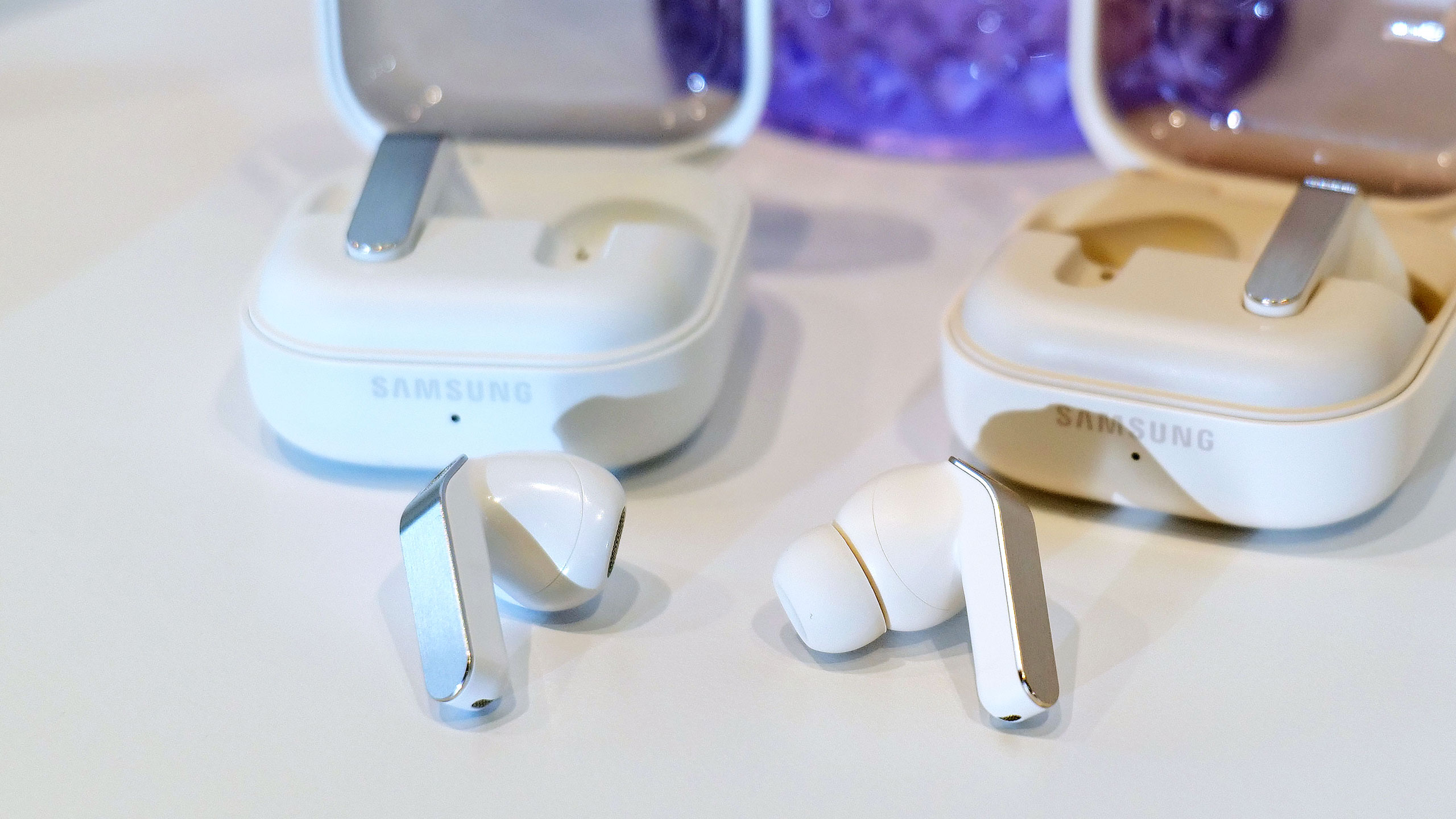
While the S26 phones are more iterative updates this year, Samsung has given its Galaxy Buds a proper refresh. It revamped the design and shape of the Galaxy Buds 4 and Galaxy Buds 4 Pro to do away with the angular look of the stems and remove the lights from them.
The earbuds have a "more refined, computationally designed fit" too, according to Samsung. The company claims the latest earbuds have smaller earbud heads that allow for a better, more secure fit and a more "comfortable experience during all-day wear." The Galaxy Buds 4 remain in an open-fit format while the Buds Pro 4 have a canal-fit design.
The latest earbuds are said to offer improved audio quality and active noise cancellation (ANC), with an ambient sound mode, adaptive EQ and adaptive ANC. On Buds 4 Pro, there's a siren detection feature that enables ambient sound to let you hear things like alarms or emergency vehicle warnings.
The Buds 4 Pro have a wide woofer that increases the effective speaker area by nearly 20 percent compared with the previous gen earbuds, Samsung said. They support 24-bit/96kHz audio.
If you're using Galaxy Buds 4 or Buds 4 Pro with a Galaxy device, you'll be able to use Bixby, Google Gemini and Perplexity with hands-free voice controls (though the "hey, Plex" command for the latter might be a tad confusing for folks who use a certain media server app). The Buds 4 Pro support head gesture controls for managing calls and Bixby interactions as well.
As with the S26 phones, pre-orders for the earbuds open today and they'll hit shelves on March 11. The Galaxy Buds 4 cost $180 and Galaxy Buds 4 Pro will run you $250. Both models are available in white and black with a matte finish. There's an online-exclusive pink option for Buds 4 Pro as well.
Android AI features
Ahead of Unpacked, Samsung confirmed that it would offer Perplexity as an AI agent option in Galaxy AI on the S26 lineup. As part of that update, it shared that the S26 series would respond to the “Hey Plex” wake phrase, and that Perplexity’s features would also be embedded in the Samsung Browser app. The company also recently updated Bixby to make its own virtual assistant more conversational.
On top of that news, Google had announcements of its own to make at Unpacked regarding new Android AI features, which will of course be available on S26 devices. On those handsets and the Pixel 10 lineup, the Gemini app will soon have a feature (in beta) that enables you to offload multi-step tasks, such as booking a ride or putting a grocery order together, to AI. It sure sounds like an attempt to build out agentic AI features on mobile devices.
Launching soon as a beta feature in the Gemini app for #Pixel10, Pixel 10 Pro, and Samsung Galaxy S26 series, you can offload multi-step tasks directly to Gemini.
— Google Gemini (@GeminiApp) February 25, 2026
Simply long-press the power button and ask Gemini to help book you a ride home or reorder your last meal. Gemini… https://t.co/GjfXTnGg0k pic.twitter.com/YGIvqBkbu3
Starting this week on Pixel 10 devices (and soon on S26 phones), Circle to Search will offer the ability to find details about multiple objects at once, such as entire outfits instead of single pieces. Moreover, Gemini-powered, on-device Scam Detection for phone calls will be available for S26 devices in English in the US.
Update, February 25 2026, 4:35PM ET: This story has been updated to include more details on the Perplexity AI integration, as well as include mentions in the intro of our hands-on and pre-order articles.
This article originally appeared on Engadget at https://www.engadget.com/mobile/everything-announced-at-samsung-unpacked-the-galaxy-s26-ultra-galaxy-buds-4-and-more-180000530.html?src=rssCase Studies


Compass Music Platform


NewsWeek Magazine