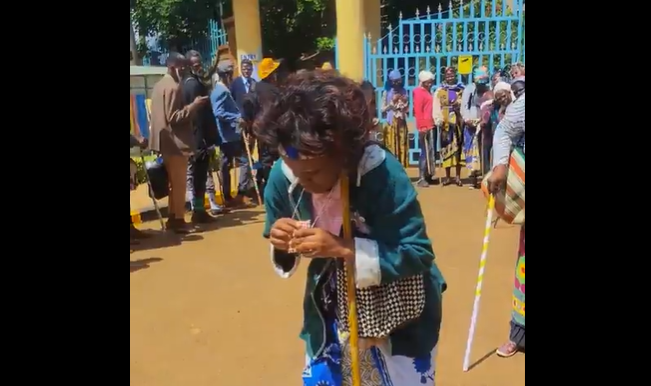
What a funny sight this is. What happens when young people pretend to be old?
You Might Think these are Old People But well,They Are Gen Zs from Chuka University in Kenya During a Cultural week,Being Born in Kenya should now be Considered a Congenital Deformity 😂😂😂🔥🔥💯 pic.twitter.com/FermhFfYfj
— Heisenberg (@DrJuma_M) April 6, 2026
Adolescents Are Imitating Grandmothers on TikTok—Amusing Trend or Cunning Issue?
Greetings, have you seen those entertaining videos where individuals in their twenties don gray wigs, take up walkers, and commence conversing as if they are 80 years old? It’s becoming increasingly popular on TikTok, Reels, and even Discord discussions—young people embodying “grandma energy” with witty baking advice or moving about in orthopedic footwear for “experiments. ” Whether termed age-play or grandma transformation, it is ubiquitous and has captured widespread attention.
So why are young individuals engaging in this behavior? Primarily for amusement—consider exaggerated “in my time” monologues that accumulate millions of views. Some delve further, such as dedicating a week to using artificial hearing aids or walking canes to comprehend the experience of aging, thereby cultivating genuine empathy for challenges like memory lapses or difficulties with applications. Some individuals ridicule foolish stereotypes, such as older generations struggling with technology, while others merely pursue a comfortable nostalgic atmosphere through vintage attire to escape the turmoil of contemporary life. More nefarious aspects? A small number exploit it to perpetrate fraud, feigning to be isolated seniors for monetary gain.
Does it disrupt their thoughts? In a way. Research supports this assertion—investigations indicate that simulating physical impediments (such as weighted vests) enhances your patience and sensitivity to the challenges faced by seniors, ranging from diminished hearing to cognitive cloudiness.
Creators frequently experience an unusual “who am I? ” sensation, igniting periods of introspection.
However, proceed with caution: if it consists solely of fragile humor aimed at garnering approval, it may have adverse effects, leading individuals to embrace age discrimination or perceive themselves as a stereotype.
Advantage?
These videos experience significant engagement—grandmother accounts receive 30-50 percent additional comments, and fan communities emerge rapidly.
Audiences are divided. Boomers chuckle, remarking, “At last, someone articulates why remotes are frustrating!”
Empathy videos impart valuable insights on the challenges of aging.
However, detractors? Many categorize it as a lazy stereotype that ridicules absent-minded grandparents or transforms genuine challenges into TikTok content.
Certain individuals exclaim “age appropriation! ” as though it constitutes cultural larceny, and indeed, when “charming elderly women” solicit contributions, warning signals resonate. Academics refer to it as grey-age amalgamations, cautioning that it trivializes the challenging aspects of aging.
Ultimate conclusion: entertaining filter or emotional strategy? It is provoking significant discussions on age discrimination and who is permitted to engage in role-playing. As this phenomenon matures, will it develop or dwindle?