
The transition from GPT-5 (released in August 2025) to GPT-5.5 (released in April 2026) marks a critical shift in OpenAI’s development philosophy. While GPT-5 focused on shattering benchmarks and unifying reasoning with raw multi-modal capabilities, GPT-5.5 was designed to optimize that power for practical, agentic workflows and enterprise-grade execution.
The key architectural, behavioral, and performance differences between the two generations break down as follows:
1. Core Architecture & Context Capacity
- GPT-5: Introduced a unified reasoning architecture that embedded prompt-chaining and native routing (allowing the model to decide when to answer instantly vs. when to “think”). It featured a standard context window of up to 400,000 tokens via the API.
- GPT-5.5 (Codename “Spud”): Significantly scaled memory and efficiency, expanding the context window to over 1 million tokens (specifically 922,000 input and 128,000 max output tokens).
2. “Smarter for Fewer Tokens”
- GPT-5: Focused on reducing raw output verbosity compared to GPT-4o (using 50–80% fewer tokens), but complex reasoning loops still consumed a massive amount of “thinking tokens”.
- GPT-5.5: Introduced massive improvements in cost-performance and throughput. It achieves equivalent or superior reasoning results using significantly fewer reasoning tokens than prior models. Users require shorter prompts, and the model arrives at solutions with concise, optimized math and logic. OpenAI Developers
3. Shift Toward Agentic Autonomy and Tool Precision
- GPT-5: Brought “application connectors” to link the chatbot to databases and CRMs, acting primarily as a highly capable assistant.
- GPT-5.5: Designed natively for computer use and autonomous agents. It features a heavily reduced tool-call error rate, excels at complex multi-step planning, parses multi-tool environments without breaking, and naturally adapts its plan mid-stream if a tool yields unexpected data.
4. Behavioral and Prompting Nuances
- GPT-5: Relied heavily on traditional step-by-step process guidance prompting to navigate complex tasks.
- GPT-5.5: Prompts shift toward outcome-first structures. Because GPT-5.5 follows instructions with strict, literal precision, developers define the final goal, constraints, and success criteria, leaving the model to autonomously determine the best path.
- Tone: GPT-5 maintained a standard conversational tone. GPT-5.5 defaults to a highly direct, efficient, and task-oriented style in production, though its “Instant” consumer variant retains conversational warmth.
5. Hallucination Rates and Factuality
- GPT-5: Reduced hallucinations by roughly 45% compared to the GPT-4 generation.
- GPT-5.5: Pushed boundaries in high-stakes fields like law, medicine, and finance. The consumer variant (GPT-5.5 Instant) produces 52.5% fewer hallucinated claims than older iterations, utilizing an upgraded inner monologue that allows it to self-correct and catch its own factual or mathematical drift before finalizing an answer.
Summary Comparison Table
| Feature | GPT-5 (2025) | GPT-5.5 (2026) |
|---|---|---|
| Primary Focus | Unified reasoning & multi-modal foundational power. | Agentic execution, tool accuracy & token efficiency. |
| Context Window | Up to 400,000 tokens. | 1,050,000+ tokens (128K output). |
| Prompt Style | Step-by-step procedural prompting. | Outcome-first (define success criteria & goals). |
| Tool Execution | Standard connector integration. | High-precision multi-step tool chaining; minimized error rates. |
| Default Chat Tone | Conversational, standard formatting. | Highly direct, concise, and task-oriented by default. |
================
Conversation with Gemini
create an image of two male corporate workers discussing over laptops and coffee
Creating your image
analyze the difference between GPT‑5 / GPT‑5.5
The transition from GPT-5 (released in August 2025) to GPT-5.5 (released in April 2026) marks a critical shift in OpenAI’s development philosophy. While GPT-5 focused on shattering benchmarks and unifying reasoning with raw multimodal capabilities, GPT-5.5 was designed to optimize that power for practical, agentic workflows and enterprise-grade execution.
The key architectural, behavioral, and performance differences between the two generations break down as follows:
1. Core Architecture & Context Capacity
- GPT-5: Introduced a unified reasoning architecture that embedded prompt-chaining and native routing (allowing the model to decide when to answer instantly vs. when to “think”). It featured a standard context window of up to 400,000 tokens via the API.
- GPT-5.5 (Codename “Spud”): Significantly scaled memory and efficiency, expanding the context window to over 1 million tokens (specifically 922,000 input and 128,000 max output tokens).
2. “Smarter for Fewer Tokens” (Token Efficiency)
- GPT-5: Focused on reducing raw output verbosity compared to GPT-4o (using 50–80% fewer tokens), but complex reasoning loops still consumed a massive amount of “thinking tokens”.
- GPT-5.5: Introduced massive improvements in cost-performance and throughput. It achieves equivalent or superior reasoning results using significantly fewer reasoning tokens than prior models. Users require shorter prompts, and the model arrives at solutions with concise, optimized math and logic.
3. Shift Toward Agentic Autonomy and Tool Precision
- GPT-5: Brought “application connectors” to link the chatbot to databases and CRMs, acting primarily as a highly capable assistant.
- GPT-5.5: Designed natively for computer use and autonomous agents. It features a heavily reduced tool-call error rate, excels at complex multi-step planning, parses multi-tool environments without breaking, and naturally adapts its plan mid-stream if a tool yields unexpected data.
4. Behavioral and Prompting Nuances
- GPT-5: Relied heavily on traditional step-by-step process guidance prompting to navigate complex tasks.
- GPT-5.5: Prompts shift toward outcome-first structures. Because GPT-5.5 follows instructions with strict, literal precision, developers define the final goal, constraints, and success criteria, leaving the model to autonomously determine the best path.
- Tone: GPT-5 maintained a standard conversational tone. GPT-5.5 defaults to a highly direct, efficient, and task-oriented style in production, though its “Instant” consumer variant retains conversational warmth.
5. Hallucination Rates and Factuality
- GPT-5: Reduced hallucinations by roughly 45% compared to the GPT-4 generation.
- GPT-5.5: Pushed boundaries in high-stakes fields like law, medicine, and finance. The consumer variant (GPT-5.5 Instant) produces 52.5% fewer hallucinated claims than older iterations, utilizing an upgraded inner monologue that allows it to self-correct and catch its own factual or mathematical drift before finalizing an answer.
Summary Comparison Table
| Feature | GPT-5 (2025) | GPT-5.5 (2026) |
|---|---|---|
| Primary Focus | Unified reasoning & multimodal foundational power. | Agentic execution, tool accuracy & token efficiency. |
| Context Window | Up to 400,000 tokens. | 1,050,000+ tokens (128K output). |
| Prompt Style | Step-by-step procedural prompting. | Outcome-first (define success criteria & goals). |
| Tool Execution | Standard connector integration. | High-precision multi-step tool chaining; minimized error rates. |
| Default Chat Tone | Conversational, standard formatting. | Highly direct, concise, and task-oriented by default. |
How can these AI tools benefit digital marketers?
The architectural shift from GPT-5 to GPT-5.5 unlocks massive potential for digital marketing teams, moving from “content generation” to autonomous, data-driven execution.
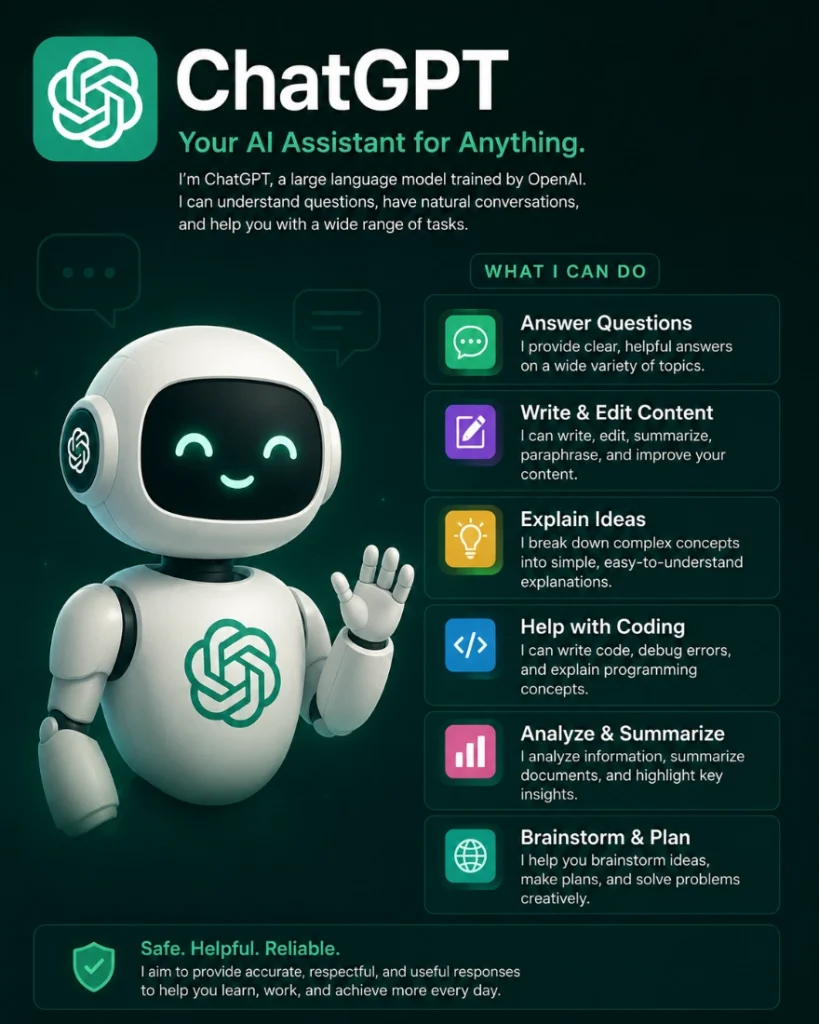
Here is how these specific upgrades directly translate to business value for digital marketers:
1. Scaling Long-Form Content & Multi-Campaign Audits
- The Tool Benefit: GPT-5.5’s massive 1-million-token context window.
- How to Use It: Instead of analyzing a single landing page or blog post at a time, marketers can upload an entire year’s worth of content, a massive competitor website scrape, or multiple comprehensive brand guidelines.
- The ROI: You can generate highly consistent, hyper-targeted content calendars and cross-channel copy audits that stay flawlessly on-brand without “forgetting” the established tone halfway through the project.
2. Drastically Lowering Campaign Operational Costs
- The Tool Benefit: Enhanced token efficiency and reduced verbosity.
- How to Use It: GPT-5.5 gets to the point faster, requiring fewer “thinking tokens” to solve complex problems.
- The ROI: For marketing teams running large-scale programmatic ad copy creation, high-volume product descriptions, or automated email sequencing via APIs, the cost per campaign drops significantly. You get higher quality variations for a fraction of the token cost.
3. Deploying True Autonomous Marketing Agents
- The Tool Benefit: Advanced multi-step tool chaining and high-precision execution.
- How to Use It: While GPT-5 was great at writing an individual social media post, GPT-5.5 can act as an autonomous agent. You can task it with a goal: “Check yesterday’s Shopify sales data, identify the lowest-performing product, look up its current ad spend on Meta, and draft three high-converting ad variations to boost its sales.”
- The ROI: It effectively reduces the tedious “copy-paste” middleman work between different marketing platforms, pivoting strategies mid-stream based on live data feedback.
4. Flawless Audience & Goal Alignment
- The Tool Benefit: Outcome-first prompting alignment.
- How to Use It: Instead of micromanaging the AI with rigid, step-by-step instructions on how to write a landing page, marketers can simply define the target audience persona, the product’s value proposition, and the strict conversion goals.
- The ROI: The model works backward from the intended psychological outcome, generating more natural, persuasive, and conversion-optimized copy that reads less like “AI fluff” and more like an experienced copywriter.
5. High-Stakes Regulatory Compliance
- The Tool Benefit: Over 50% reduction in hallucination rates.
- How to Use It: Digital marketers in highly regulated spaces—like fintech, healthcare, pharma, or legal services—can confidently use the model to draft content, knowing its internal self-correction mechanism minimizes factual errors.
- The ROI: Faster compliance approval bottlenecks and a significantly lower risk of publishing misleading information or compliance violations.
Why we still prefer GPT 5
Some people still prefer GPT-5 over newer models like GPT-5.5 for reasons that have more to do with personal preference and specific use cases than one model being universally “better.”
Common reasons include:
- Writing style: Some users feel GPT-5 has a tone they prefer—perhaps more formal, more creative, or more concise.
- Consistency: If someone built a workflow around GPT-5 (for coding, writing, or research), they may prefer its familiar behavior.
- Subjective quality: AI responses aren’t judged only by accuracy. Two models may answer correctly but with different phrasing, structure, or reasoning style, and users often develop preferences.
- Specific strengths: One model may perform better on a particular task. For example, a user might find GPT-5 produces better fiction, while GPT-5.5 is stronger at following detailed instructions or handling complex reasoning.
- Habit: People tend to stick with tools they know well, especially if those tools have served them reliably.
That said, newer models generally aim to improve on earlier ones by offering:
- Better reasoning on complex problems.
- More reliable instruction-following.
- Fewer factual errors (though no model is perfect).
- Faster responses and better efficiency.
- Improved multimodal capabilities (depending on the platform).
Ultimately, the best model depends on what you’re doing. If your priority is creative writing, you might prefer one model. If it’s programming, data analysis, or following detailed prompts, you might prefer another.
Compare GPT-5 vs. GPT-5.5 across content writing and SEO
If your main goal is publishing high-quality articles that rank in Google, both GPT-5 and GPT-5.5 are excellent. However, GPT-5.5 generally has the edge for SEO content production.
| Feature | GPT-5 | GPT-5.5 |
|---|---|---|
| Long-form articles | ⭐⭐⭐⭐☆ | ⭐⭐⭐⭐⭐ |
| SEO optimization | ⭐⭐⭐⭐☆ | ⭐⭐⭐⭐⭐ |
| Following detailed briefs | ⭐⭐⭐⭐☆ | ⭐⭐⭐⭐⭐ |
| Natural writing | ⭐⭐⭐⭐⭐ | ⭐⭐⭐⭐⭐ |
| Original phrasing | ⭐⭐⭐⭐☆ | ⭐⭐⭐⭐⭐ |
| Fact consistency | ⭐⭐⭐⭐☆ | ⭐⭐⭐⭐⭐ |
| Speed | Fast | Faster |
| Editing existing articles | Excellent | Excellent+ |
1. Long-form content
GPT-5
- Produces engaging articles.
- Sometimes repeats ideas in articles over 2,000 words.
- May require more editing for flow.
GPT-5.5
- Better organization.
- Stronger transitions between sections.
- Less repetition.
- Better at maintaining one consistent tone from start to finish.
Winner: GPT-5.5
2. SEO writing
For modern SEO, Google rewards content that is:
- Helpful
- Original
- Well structured
- Written for humans first
GPT-5.5 does a better job at:
- naturally including keywords
- avoiding keyword stuffing
- writing descriptive headings
- answering search intent
- creating featured-snippet-friendly paragraphs
- generating FAQs
For example, if you ask for:
“Write a 2,500-word article on Binance in Nigeria with FAQs, pros and cons, expert tips, and SEO optimization.”
GPT-5.5 is more likely to produce a publish-ready draft.
Winner: GPT-5.5
3. Article rewrites
You’ve asked many times for:
- plagiarism-free rewrites
- unique subheadings
- SEO descriptions
- clean news articles
GPT-5.5 tends to:
- rewrite more deeply rather than swapping synonyms
- preserve facts while changing sentence structure
- create more distinctive headings
- reduce repetitive phrasing
This makes the output feel more original.
Winner: GPT-5.5
4. Human-like writing
GPT-5 already writes naturally.
GPT-5.5 usually improves by:
- varying sentence lengths
- using smoother transitions
- reducing AI-like repetitive patterns
- making the article read more like something written by an experienced editor
5. Following complex instructions
Suppose you request:
Rewrite this article.
Add H2 and H3 headings.
Make it plagiarism-free.
Include FAQs.
Add a 160-character SEO description.
Add schema markup.
Create a catchy title.
Keep it under 2,000 words.
GPT-5.5 is more likely to satisfy all of those requirements in one pass.
6. SEO metadata
GPT-5.5 is generally stronger at producing:
- SEO titles
- meta descriptions
- slug suggestions
- keyword ideas
- image alt text
- FAQ sections
- internal linking suggestions
7. News article writing
For news-style content, GPT-5.5 often produces:
- cleaner introductions
- better paragraph flow
- more professional formatting
- fewer repetitive phrases
This is particularly useful if you publish technology news, press releases, or product announcements.
8. Google ranking
No AI model can guarantee Google rankings.
What matters most is:
- originality
- factual accuracy
- usefulness
- topical authority
- good site performance
- quality backlinks
- satisfying search intent
GPT-5.5 can help produce content that aligns better with these goals, but rankings still depend on your overall SEO strategy.
Which should you choose?
For a content publisher or blogger:
- Choose GPT-5 if you want strong writing and don’t mind polishing the final draft.
- Choose GPT-5.5 if you want more publish-ready articles, stronger SEO structure, and better adherence to detailed instructions.
For experts who love rewriting press releases, creating unique articles with subheadings, writing SEO descriptions, and preparing content for WordPress—GPT-5.5 is generally the better fit because it consistently produces cleaner, more structured drafts that require less editing before publication.
What about for those who create websites?
For website creation, GPT-5.5 is generally the stronger choice, especially if you’re building modern, production-ready sites. That said, GPT-5 is still very capable.
Here’s how they compare for common web development tasks:
| Task | GPT-5 | GPT-5.5 |
|---|---|---|
| HTML/CSS | ⭐⭐⭐⭐⭐ | ⭐⭐⭐⭐⭐ |
| JavaScript | ⭐⭐⭐⭐☆ | ⭐⭐⭐⭐⭐ |
| PHP | ⭐⭐⭐⭐☆ | ⭐⭐⭐⭐⭐ |
| WordPress | ⭐⭐⭐⭐☆ | ⭐⭐⭐⭐⭐ |
| Debugging | ⭐⭐⭐⭐☆ | ⭐⭐⭐⭐⭐ |
| Code explanation | ⭐⭐⭐⭐⭐ | ⭐⭐⭐⭐⭐ |
| UI/UX suggestions | ⭐⭐⭐⭐☆ | ⭐⭐⭐⭐⭐ |
| Following detailed specs | ⭐⭐⭐⭐☆ | ⭐⭐⭐⭐⭐ |
1. WordPress development
If you build WordPress sites, GPT-5.5 is especially useful for:
- Custom themes
- Child themes
- Plugin development
- WooCommerce customization
- Gutenberg blocks
- Performance optimization
- Security improvements
- SEO configuration
- Troubleshooting plugin conflicts
It also tends to produce cleaner PHP and WordPress code with fewer revisions.
2. Debugging website problems
For issues like:
- White Screen of Death
- 500 Internal Server Error
- Database connection errors
- Broken CSS
- JavaScript console errors
- Slow page loads
GPT-5.5 generally identifies likely causes more accurately and suggests a more systematic debugging process.
3. Building complete websites
If you ask:
“Build me a responsive landing page with HTML, CSS, JavaScript, contact form, pricing table, FAQ, animations, and dark mode.”
GPT-5.5 is more likely to:
- Keep the code organized.
- Use reusable components.
- Maintain consistent styling.
- Handle edge cases better.
4. WordPress SEO
GPT-5.5 is strong at helping with:
- Site structure
- Internal linking
- Schema markup
- Robots.txt
- XML sitemaps
- Core Web Vitals recommendations
- Image optimization
- Meta tags
- Breadcrumbs
5. Performance optimization
It generally gives better advice for:
- Caching
- Image compression
- Lazy loading
- JavaScript optimization
- CSS optimization
- Database cleanup
- CDN usage
- Core Web Vitals improvements
6. Security
GPT-5.5 can help with:
- Hardening WordPress
- Preventing common vulnerabilities
- Input validation
- SQL injection prevention
- XSS mitigation
- CSRF protection
- Secure authentication practices
7. Full-stack development
If you’re working with technologies like:
- React
- Next.js
- Vue
- Node.js
- Express
- Laravel
- Django
- Tailwind CSS
- Bootstrap
GPT-5.5 generally produces code that is more consistent, easier to maintain, and better aligned with current development practices.
Which is better for a website creator?
If you’re:
- Building WordPress websites
- Maintaining client websites
- Fixing errors
- Creating landing pages
- Optimizing SEO
- Improving speed and security
- Writing custom PHP or JavaScript
In this case, GPT-5.5 is the better overall choice.
Given the kinds of questions you’ve asked recently—about WordPress, SEO, affiliate links, and site optimization—you’d likely benefit from GPT-5.5’s stronger ability to follow detailed technical requirements and produce code or content that’s closer to being ready for deployment.