X is testing a new ad format that connects posts with products
An ad test on X promotes Musk’s Starlink beneath original content.


As part of a Year in Review blog detailing changes Valve made to Steam in 2025, the company shared a minor update on its hardware plans that doesn’t sound good for anyone hoping to buy a Steam Machine, Steam Controller or Steam Frame in 2026. Specifically, the company is now opening up the possibility its new hardware won’t ship this year at all.
In February, when Valve acknowledged the ongoing memory and storage shortage had delayed the launch of its hardware and could lead to higher prices, the company was still committing to a (fairly wide) window of when its hardware would ship:
“Our goal of shipping all three products in the first half of the year has not changed. But we have work to do to land on concrete pricing and launch dates that we can confidently announce, being mindful of how quickly the circumstances around both of those things can change.”
As of the company’s latest post, however, things somehow sound even less certain. “We hope to ship in 2026, but as we shared recently, memory and storage shortages have created challenges for us,” Valve wrote in its Year in Review post. “We’ll share updates publicly when we finalize our plans!”
While Valve’s air of secrecy can make it easy to read too much into the limited information the company does share, moving from “the first half of the year” to “[hoping] to ship in 2026” certainly gives it wiggle room to not release new hardware this year. And considering the difficulties other companies are facing sourcing memory and storage, it wouldn’t be all that surprising.
HP said in February that RAM accounts for a third of its PC costs, and industry analysts expect the RAM shortage could radically alter the PC landscape as companies are forced to raise prices. Valve’s already struggling to keep the Steam Deck in stock due to its issues securing RAM, it stands to reason sourcing components for even more devices wouldn’t make that process any easier. Then again, the company hasn’t updated its launch timing FAQ, so there’s still reason to hope the Steam Machine ships in 2026.
This article originally appeared on Engadget at https://www.engadget.com/gaming/pc/valve-doesnt-sound-confident-the-steam-machine-will-ship-in-2026-221709517.html?src=rss
Netflix’s library of streamable party games is expanding today with a custom version of Overcooked! All You Can Eat. Netflix launched its cloud gaming program with games like Lego Party and Tetris Time Warp, but Overcooked feels a bit unique because it features a roster of Netflix-affiliated characters from KPop Demon Hunters and Stranger Things.
For the uninitiated, Overcooked plays like a more manic version of Diner Dash, where teams attempt to prepare food together in increasingly elaborate kitchens filled with obstacles. The original version of Overcooked! All You Can Eat was released in 2020, and includes DLC and stages from previous versions of the game. Netflix’s version bundles in the same content, and “10 Netflix celebrity chefs” including “Dustin, Eleven, Lucas, and the Demogorgon from Stranger Things,” and “half-dozen faces from KPop Demon Hunters,” like “Mira, Rumi, Zoey, Jinu, Derpy and Sussie.” Like Netflix’s other streaming games, playing Overcooked also requires you to use a connected smartphone as a controller.
Offering a growing library of streaming games is part of Netflix’s new strategy under Alan Tascan, a former executive from Epic Games. Tascan took over as Netflix’s President of Games in 2024, and appeared to start revamping the company’s plans not long after, cancelling the release of several mobile games and reportedly shutting down its AAA game studio. Netflix is also continuing to adapt video games into content for its platform. For example, A24 is reportedly developing a game show based on Overcooked for the streaming service.
This article originally appeared on Engadget at https://www.engadget.com/gaming/netflixs-version-of-overcooked-lets-you-play-as-huntrx-212515187.html?src=rss
Nintendo of America is suing the US government, including the Department of Treasury, Department of Homeland Security and US Customs and Border Protection, over its tariff policy, Aftermath reports. The video game giant already raised prices on the Nintendo Switch in August 2025 in response to “market conditions,” but has so far left the price of its newer Switch 2 console unchanged.
Nintendo’s lawsuit, filed in the US Court of International Trade, cites a Supreme Court ruling from February that confirmed a lower courts’ opinion that the Trump administration’s global tariffs were illegal. Nintendo’s lawyers claim that the video game company has been “substantially harmed by the unlawful of execution and imposition” of “unauthorized Executive Orders,” and the fees Nintendo has already paid to import products into the country. In response, the company is seeking a “prompt refund, with interest” of the tariffs it has paid.
“We can confirm we filed a request,” Nintendo of America said in a statement. “We have nothing else to share on this topic.”
While taxes and other trade policies are supposed to be set by Congress, President Donald Trump implemented a collection of global tariffs over the course of his first year in office using executive orders and the International Emergency Economic Powers Act (IEEPA), a law that gives the president expanded control over trade during a global emergency. The Trump administration has positioned tariffs as a way to punish enemies and bargain with trade partners, but many companies have passed the increased price of importing goods onto customers.
In upholding opinions from the US District Court of the District of Columbia and the US Court of International Trade, the Supreme Court removed the Trump administration’s ability to collect tariffs using IEEPA, but didn’t clarify how the tariffs the government had illegally collected should be returned to companies. Like Nintendo, other companies have decided filing a lawsuit is the best way to get refunded.
The Guardian reports that US Customs and Border Protection is already preparing a system to process refunds for affected companies, but that might not mark the end of Trump’s tariff regime. In a press conference held after the Supreme Court released its decision, the President announced plans to introduce tariffs using other, more constrained methods. Tariffs aren’t the only obstacle Nintendo faces, either. The company could also be forced to raise the price of its consoles in response to the current RAM shortage.
This article originally appeared on Engadget at https://www.engadget.com/gaming/nintendo/nintendo-is-suing-the-us-government-over-trumps-tariffs-191849003.html?src=rss
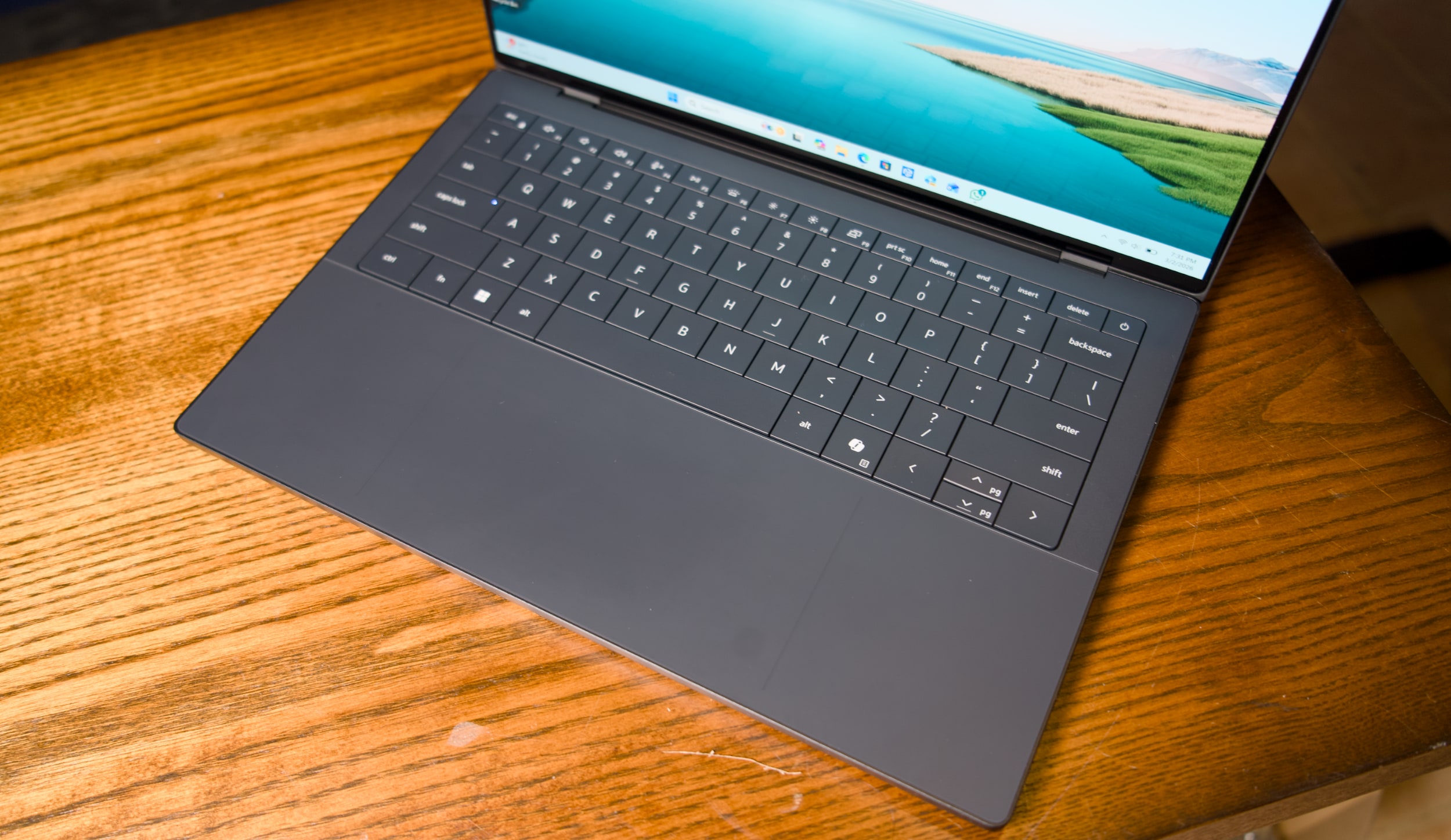
There is so much to love about Dell’s new XPS 14, it’s hard for me to discuss it without sounding like a total fanboy. Its new design makes it incredibly thin and light. And Intel’s Panther Lake chips give it a ton of power, even when it comes to games. After reviving the XPS brand from last year’s ignominious rebranding, it’s as if Dell was laser-focused on fixing all the issues we’ve had with the XPS 14 so far.
Unfortunately, a shallow, unresponsive and hilariously error-prone keyboard kept me from truly loving the XPS 14. Simply put, it has trouble recognizing keys if you press them too quickly in succession. And for fast and demanding typists like myself, that leads to countless errors that disrupt your flow. In the last sentence alone, I counted ten times where I had to go back and make sure commas appeared before a space, or tweak simple spelling errors. What good is a fast, light and beautiful machine if I can’t type a sentence in peace?
It’s not unusual for laptop keyboards to require a bit of user training. But my issues with the XPS 14 aren’t from a lack of practice — it simply doesn’t recognize key presses as quickly as every other laptop I’ve tested. As you can see in the video below, quick key presses are almost always recognized in reverse, or sometimes aren’t recognized at all. Those issues mostly go away if you type more slowly and deliberately, but that seems like a ridiculous compromise for a premium machine in 2026.
Dell engineers are currently testing one of the two review samples I received, both of which exhibited the exact same keyboard issue. Other reviewers have also noted that they need to type more slowly for the keyboard to work best. Gizmodo’s Kyle Barr seems to be just as frustrated with the keyboard as I am, but he thinks it’s due to Dell’s seamless key design, which doesn’t have any spaces between keys. My brother, who is an IT professional, also noticed the input issues when he typed on the XPS 14.
I’m not crazy, I swear!
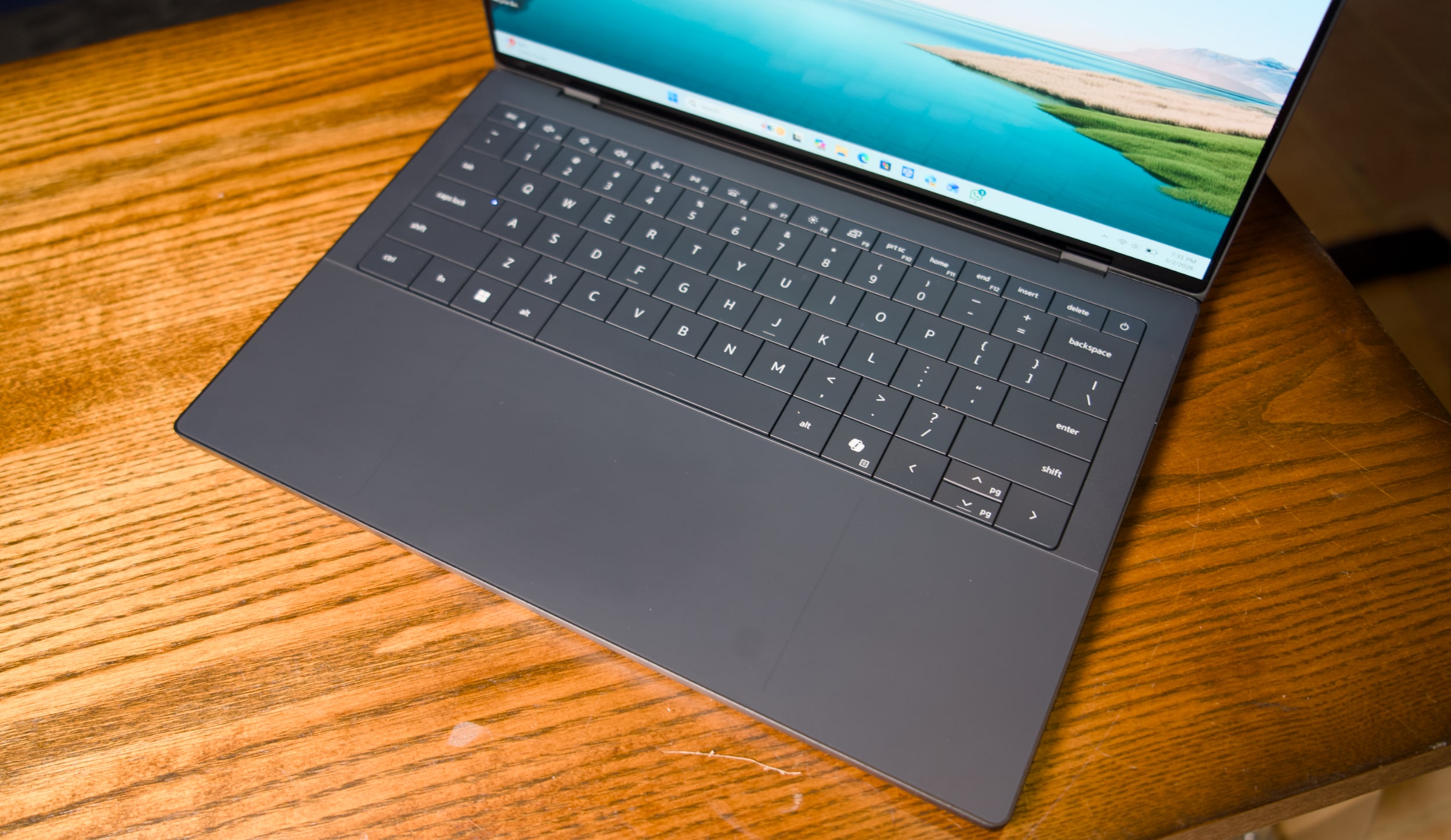
According to Dell, its engineers say that “a small batch of early XPS units” have the quick typing issue I ran into. They also say the issue is currently resolved and doesn’t affect XPS units shipping now. The company plans to release a firmware fix later this month, and I’ll be sure to update this review once I get my hands on it. But given that these laptops have been out in the wild for weeks, I decided to review the XPS 14 as is. TL;DR, it’s the prettiest machine I’ve ever used that I hate to type on.
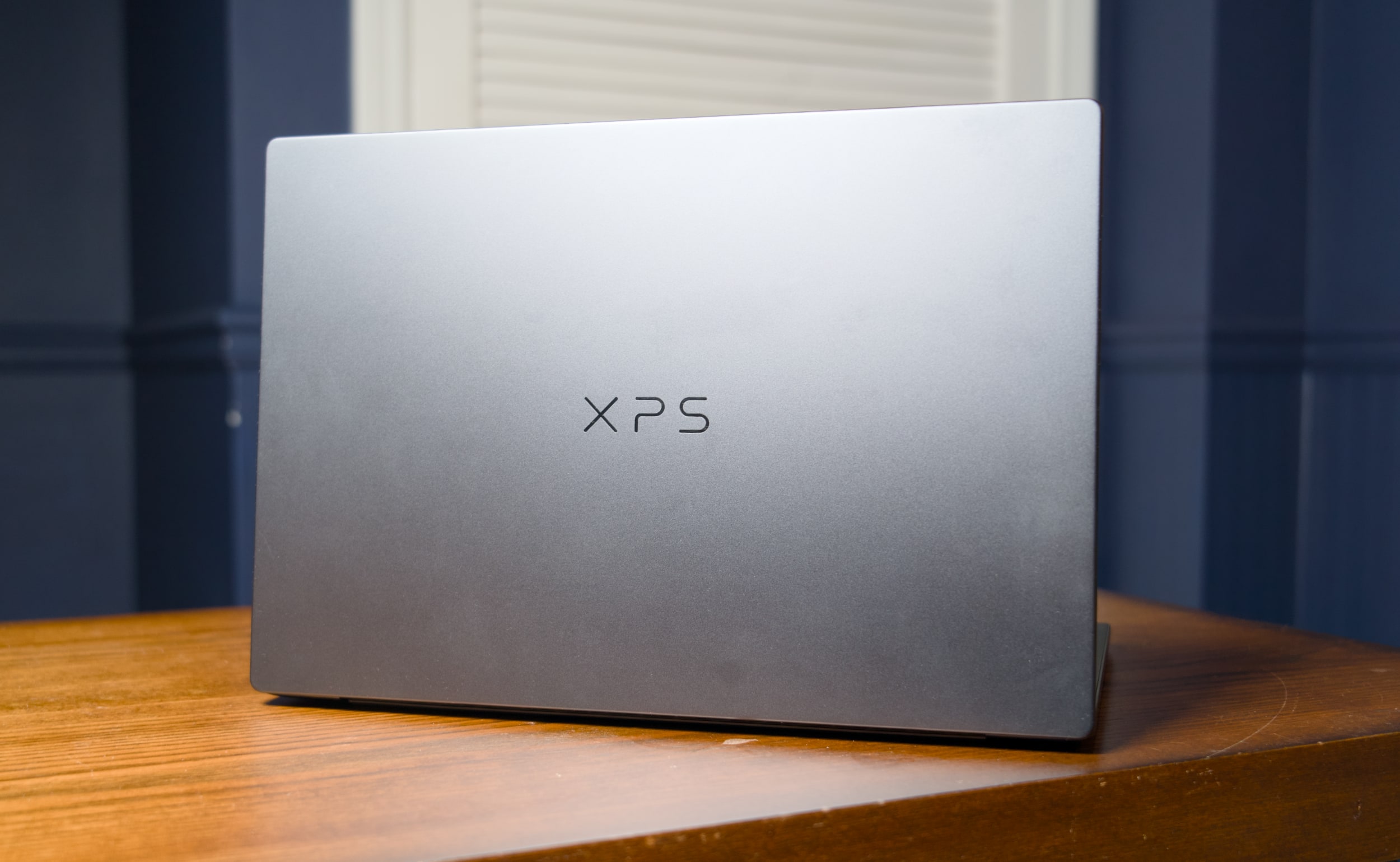
Seriously, this thing is gorgeous. Dell’s designers outdid themselves with the machine’s smooth metal case, which is more MacBook-like than its boxy predecessors. It’s astonishing this system weighs just three pounds, putting it right between the 3.4-pound 14-inch MacBook Pro and the 2.7-pound 13.6-inch MacBook Air. It’s also just a third of a pound heavier than the MacBook Neo, Apple’s attempt at an underpowered entry-level laptop.
I’m also glad to see that Dell has heard my complaints about how over-designed the last XPS line was. For example, the company has stuck with its “invisible” trackpad, which sits flush with the laptop’s wrist rest. But now there are two faint lines that designate where, exactly, the trackpad begins and ends. It’s a solution reminiscent of Apple’s MacBooks, which all feature large glass trackpads separated by a light border from their metal cases. Thanks to these two small lines, which don’t detract from XPS 14’s minimalist aesthetic, I feel more confident swiping around.
Dell also reversed course on the wonky capacitive function row from the previous models — which again, looked cool, but had some serious usability issues. It was tough to touch type with them, since they didn’t feel as tactile as normal keys. And most crucially, the capacitive function row completely disappeared in direct sunlight. God forbid you were outside and wanted to change the volume level! This XPS 14 brings back a normal keyed function row, which is easier to touch type on and actually works in direct sunlight. (I sometimes wonder if Dell’s designers ever went outside with the last XPS 14.)
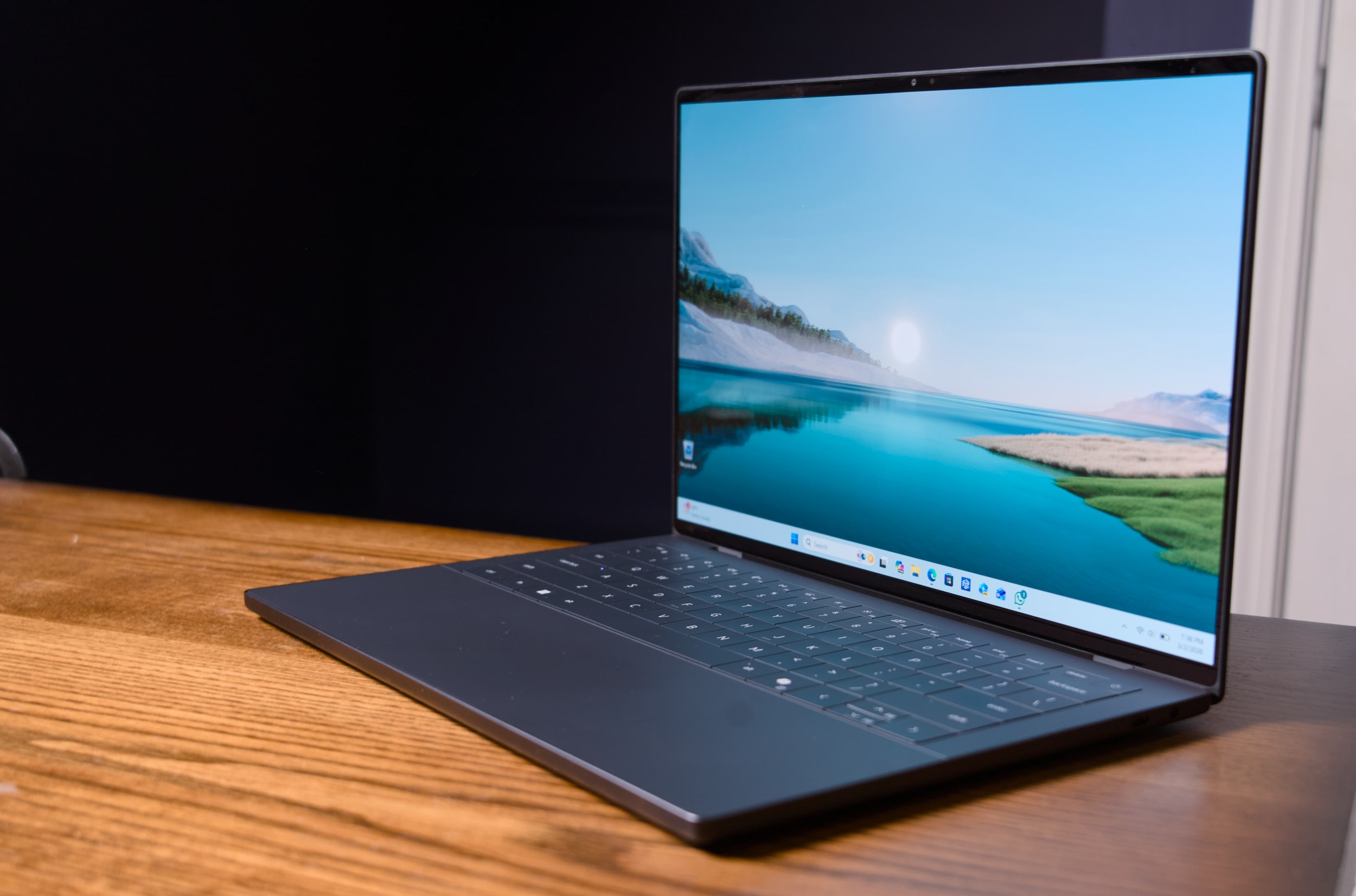
Our review model’s 2.8K 14-inch OLED touchscreen looked spectacular, with bold colors and wonderfully deep black levels. But that’s pretty much what I’ve come to expect from OLED by this point. I can’t get enough of the extra eye candy OLED adds to photos and videos, and it makes a huge difference with games as well. But take note that OLED is only available for the priciest XPS 14, all other models get a standard non-touch 2K LCD.
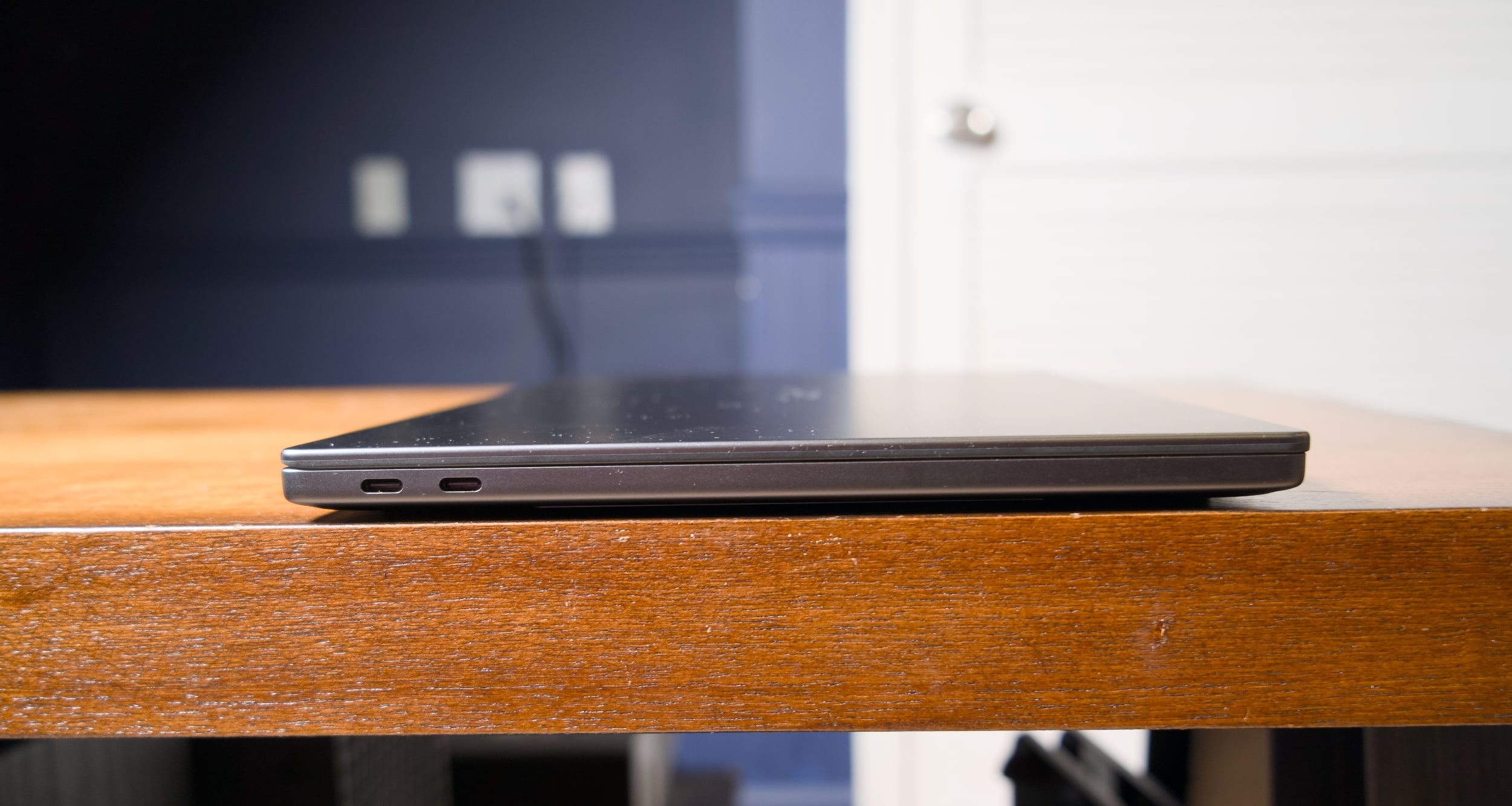
When it comes to connectivity, three USB-C ports and a headphone jack are all you get with the new XPS 14. The microSD card slot from the previous model is gone, and there’s also no HDMI or USB Type A connections like you’d find on similar systems from ASUS and Acer. Apple’s 14-inch MacBook Pro, notably, features three USB-C ports, a full-sized HDMI slot, a large SD card reader and a headphone jack.
Beyond Dell’s redesign, the main star of the XPS 14 is Intel’s new Panther Lake Core Ultra X7 358H chip, which offers some serious graphics upgrades over the last generation. Our review unit, which featured 32GB of RAM and Intel’s built-in Arc B390 GPU, was able to reach 130fps in Arc Raiders while playing in 1080p with medium graphics settings, as well as XeSS upscaling and frame generation. I was able to play through a few rounds with no lag — my only distraction was the lingering realization I was playing so smoothly on an ultraportable’s integrated graphics.
I certainly wouldn’t recommend the XPS 14 for heavy gamers. But if you’re forced to choose a new non-gaming system for work or school, it’s certainly nice that it can play some modern titles well. I also saw 63fps while playing Cyberpunk 2077 in 1080p with medium graphics settings and XeSS tech active. Not bad for one of the most demanding PC games in recent memory!
|
Computer |
PCMark 10 |
Geekbench 6 |
Geekbench 6 GPU |
Cinebench 2024 |
|---|---|---|---|---|
|
Dell XPS 14 (Intel Core Ultra X7 358H) |
9,651 |
2,890/16,745 |
56,378 |
125/685 |
|
MSI Prestige 14 Flip AI+ (Intel Core Ultra X7 358H) |
10,169 |
2,864/16,633 |
56,425 |
117/719 |
|
Apple MacBook Pro 14-inch (M5, 2025) |
N/A |
4,310/18,003 |
48,840 |
197/1,034 |
|
Dell 16 Premium (Core Ultra 7 255H, NVIDIA RTX 5070) |
7,780 |
2,711/15,919 |
109,443 |
127/1,104 |
Benchmarks also point to plenty of power under the hood: The XPS 14 scored similarly to the MSI Prestige 14 AI+, which also has the Ultra X7 358H chip, in PCMark 10 and Geekbench 6. I was also surprised to see that its single-core Geekbench 6 score was higher than ASUS’s ProArt PX13 GoPro Edition, a beastly machine with 128GB of RAM and a powerful AMD Ryzen AI Max+ 395 chip. The XPS 14 also scored 3,000 points higher than the Acer Predator Triton 14 AI gaming laptop (powered by a last-gen Core Ultra 9 288V chip) in Geekbench’s multi-threaded CPU test.
Clearly, this was a growth year for Intel’s hardware. Just keep in mind that all of our figures come from Dell’s highest-end XPS 14 configuration, which currently starts at $2,250 with 64GB of RAM on the company’s site. The lowest-end configuration, which starts at $1,450, comes with an Intel Core Ultra 7 355 chip, 16GB of RAM and 512GB of storage. When I briefly tested that system (it had to be sent back to Dell for that keyboard issue), it scored 2,000 points lower than the Ultra X7 model in PCMark 10. I didn’t get to game on the entry-level XPS 14, but I wouldn’t expect much, since Intel’s beefy Arc graphics are reserved for its pricier X7 and X9 CPUs.
I was also surprised to see that the XPS 14 lasted just 10 hours and 21 minutes in PCMark 10’s Modern office battery test. The MSI Prestige 14 went for a whopping 22 hours and 15 minutes — that’s far more in line with Intel’s efficiency claims for Panther Lake systems. I tested both the XPS 14 and MSI Prestige 14 in Window’s “balanced” battery profile, so you may be able to eke out more life with more battery saving features turned on.
If I were to judge the XPS 14 based purely on its specs and design alone, it would be my favorite Windows laptop available today. But I swear, I can’t live with its keyboard issues. I had to seriously slow down my typing just to get this review written, and even then I still had to back up and make more corrections than usual. Dell is so close to making a PC that’s a true MacBook Pro competitor, it’s a shame a simple keyboard issue holds the XPS 14 back from true greatness.
Update 3/6/26 2:20PM ET: Added further information about the XPS 14’s keyboard issue and a potential firmware fix.
This article originally appeared on Engadget at https://www.engadget.com/computing/laptops/dell-xps-14-2026-review-a-beautiful-laptop-that-excels-at-almost-everything-except-typing-130000656.html?src=rss