Home Blog Page 5

Video: Check Out The Amazing Way Snoop Dogg Introduces New Album

0

You think it’s real?

Snoop Dogg recently released a new album promoted with viral AI-generated visuals of him roller skating or skateboarding on a dog, blending fun, nostalgic vibes with his signature West Coast style.

Album Details

The project appears tied to his 22nd studio album, 10 Til Midnight, dropped around April 10, 2026, under Death Row Records, featuring collaborations and fresh beats from producers like DJ Battlecat.

Promotional clips on Instagram, Facebook, and TikTok show Snoop in exaggerated skating antics on a dog, syncing with tracks evoking roller rink energy.

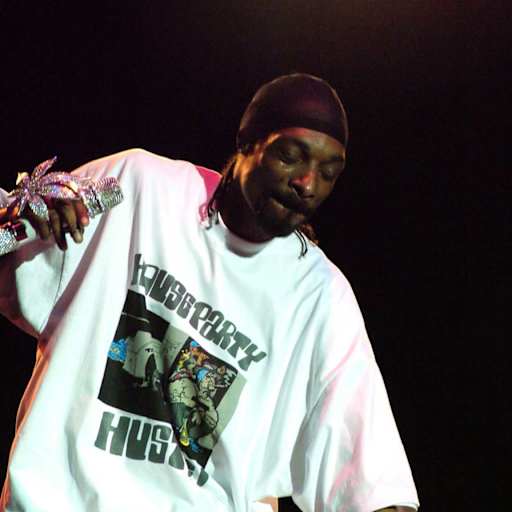
Snoop Dogg performing at City Stages.

A standout is “Roller Rink” featuring Anderson .Paak, with a 2026 music video capturing that groovy, retro party feel.

Earlier releases like Iz It A Crime? (May 2025) set the stage with guests such as Pharrell, Wiz Khalifa, and Sexyy Red, but the skate-dog campaign spotlights this latest effort.

This image captures Snoop Dogg in a classic performance pose, emblematic of his enduring stage presence across decades of albums.

Source: Internet

Why Pay for Plastic Plates When You Can Make Them Yourself?

0

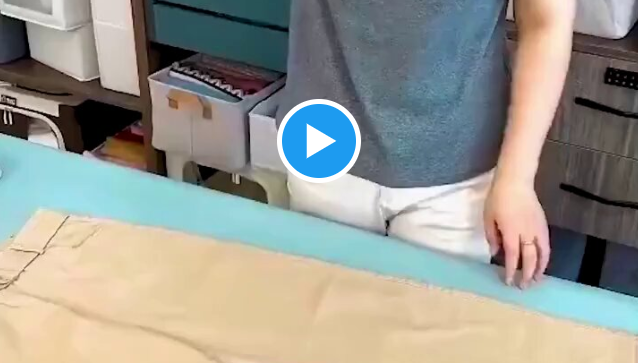
Watch as this young lady manufactures plastic plates for eating food, right there in front of her home.

List of things that you can make from plastic or rubber

Many common items are created using plastic or rubber because they are strong, adaptable, and easy to shape. These materials are found in various manufacturing, crafting, and recycling activities.

Plastic Items

Plastic is useful for making hard and semi-hard products, often sourced from used bottles or new polymers.

Containers and bottles for beverages, storage, or wrapping.

Bags, such as tote bags and messenger bags made from melted recycled plastic.

Parts for furniture like chairs, lamps, and holders for jewelry.

Toys, beads, and saving banks made from repurposed bottles.

Lanterns, candle holders, and organizers crafted from straws or bottles.

Rubber Items

Rubber, whether natural or man-made, is great for uses that require stretch and strength.

Tires and tubes for bikes, cars, and planes.

Seals, gaskets, hoses, and the bottoms of shoes.

Gloves, condoms, balloons, and tubes for medical use.

Mats, flooring, insulated wires, and wetsuits.

Toys, pacifiers, and parts of footwear.

DIY Projects

Both of these materials are excellent for upcycling into enjoyable and useful items.

Bracelets and buttons made from straws; kites from bags.

Slippers, toy cars, and tornado bottles created from bottles.

Fish artwork or discovery bottles made from crushed recyclables.

Fela Dance Dance Performance Per 2 Youths

0

Why Dancing to Fela Anikulapo-Kuti’s Music in Public is a Powerful Statement

A unique energy fills the atmosphere when the first brass sounds of a Fela Kuti song resonate in a public location. Whether in a lively square in Lagos, a subway station in New York, or a park in London, there is a noticeable change.

People pause. Tensions ease. Feet discover a rhythm that feels more like an urge than a decision.

Seeing a crowd dance to Fela goes beyond just fun; it is a strong experience of shared freedom. Here’s why dancing to this Afrobeat icon in public is so much more than just having a good time.

The Rhythm of Defiance

Fela Kuti wasn’t just a musician; he created statements. Each song—from the sharp social critique in “International Thief Thief (I. T. T.)” to the powerful “Zombie”—is rooted in political disagreement and anti-colonial efforts.

When you dance to Fela in a public place, you are not merely swaying to a beat. You are taking part in a history of resistance. The complex, captivating rhythms of Afrobeat encourage movement, while the lyrics remind you of the reasons behind your movement.

It is a way of claiming your spot in public—defiantly asserting, “We exist, we are vibrant, and we will not be silenced.”

The Great Equalizer

There is a deep sense of equality in a dance circle inspired by Fela. When the saxophone solos reach their peak, social classes fade away.

In a public area, you can see lawyers, students, street vendors, and artists all caught in the same rhythmic state. Fela’s music serves as a unifier; it calls for a physical reaction that makes social rankings unimportant.

For those moments during the song, everyone is simply another person moving to the brilliance of the Africa ’70 or Egypt ’80 bands. It represents one of the purest forms of shared happiness, free from the stress of everyday life.

The “Afrobeat Trance”

Why does Fela’s music have such an effect on our bodies? It’s due to the careful creation of the music. Fela’s songs include downtime—long, winding instrumental sections that let listeners dive deep into the rhythm.

When you dance in public to these lengthy jams, you aren’t anticipating a sudden change or a quick sing-along. Instead, you enter a state of meditation.

It’s a rhythmic surrender. In the heart of a city, surrounded by traffic and busy people, Fela’s music offers a portable refuge where the next beat is the only thing that matters.

How to Get Involved

You don’t need to be a skilled dancer to enjoy Afrobeat. Actually, Fela’s music promotes movement without fixed dance steps. It’s about feeling, stomping, and swaying.

Tune in to the drums: Let the congas and shekere direct your movements before the brass comes in.
Find your groove: Focus less on appearance. Fela’s music celebrates energy, not how it looks.
Join the community: If you notice a crowd dancing to Fela out in the open, don’t just stand back and watch. Jump in, feel the beat, and share in the energy of the group.

The Last Rhythm

Fela Kuti is known for saying, “Music is a tool for the future. ” By dancing to his tunes in public, we show that the future is for those who are alert, conscious, and connected with each other.

So, the next time you hear that well-known Afrobeat horn sound filling the streets, don’t just keep moving. Pause. Take a breath. Let the music inspire you. Because in that public dance, we are not only enjoying ourselves—we are honoring the legacy of the Black President.

Expert Ways to Fold A Cloth – Video

0

In our fast-paced world, we often overlook the small, repetitive tasks that fill our days. We rush through chores, viewing them as obstacles between us and our “real” lives. But what if one of the simplest tasks—folding a cloth—could actually be a gateway to mindfulness and a more organized home?

Whether it’s a linen napkin, a plush bath towel, or a microfiber cleaning cloth, the way we treat our household textiles speaks volumes about how we treat our space. Today, let’s rediscover the quiet satisfaction of a perfectly folded cloth.

The Zen of Folding

Have you ever noticed that folding laundry can be surprisingly meditative? When you focus entirely on the crisp edge of a towel meeting its match, or the smoothing of a napkin to remove wrinkles, your brain takes a break from the noise of emails, news, and to-do lists.

Folding is an act of restoration. You are taking something used and crumpled and returning it to a state of order. It’s a small victory of control in a chaotic world.

The Hospital Corner Technique (and Why It Matters)

If you want to level up your folding game, it’s all about the edges. Here is the professional approach to folding a square cloth or napkin:

  1. Lay it flat: Smooth the cloth out on a clean surface. If it’s wrinkled, a quick pass with your hand can help, though a light press with an iron turns the task into a boutique experience.
  2. The Half-Fold: Bring the bottom edge to meet the top edge perfectly. Align the corners. If the corners don’t match, the whole fold will be skewed.
  3. The Crease: Run your hand along the folded edge to create a sharp, crisp line.
  4. The Final Fold: Depending on the size, fold it in half again (or in thirds for a smaller square).
  5. The Result: A neat, stackable square that looks like it belongs in a high-end department store.

Why It’s Worth the Effort

Beyond the immediate aesthetic appeal of a tidy linen closet, there are three practical reasons to master the fold:

  • Space Optimization: Properly folded items take up significantly less room. If you’re struggling with overflowing drawers, the culprit is likely sloppy folding rather than a lack of storage.
  • Fabric Longevity: When linens are folded neatly, they are less prone to deep, set-in creases that can eventually lead to fabric breakdown along the fold lines.
  • The “Ready-to-Use” Boost: There is a distinct psychological difference between grabbing a rumpled cloth and pulling a perfectly crisp, stacked one from the shelf. It makes the act of setting a table or cleaning a spill feel intentional and elevated.

Turn the Mundane into the Meaningful

Next time you find yourself with a basket of clean laundry, don’t treat it as a chore to be “gotten over with.” Put on a podcast or your favorite album, clear a space, and treat the folding of each cloth as an act of service to your home and yourself.

Mariah Carey Sings Loud In Public After A Long Time

0

The grocery store was calm, which was the first sign of coming trouble. It was a Tuesday at 10:00 AM—the perfect time for peace in the suburbs, where the only sounds came from the humming freezers and the soft squeaking of a shopping cart with a faulty wheel.

Then, the automatic doors opened with a hiss, and the mood shifted. It was not just any person who walked in; it felt like a storm was approaching. Mariah Carey had come, looking for Himalayan sea salt.

The Beginning

Mariah doesn’t “shop. ” She moves as if the tiles beneath her feet are soft clouds made from old silk. She wore huge sunglasses that looked like dinner plates and a faux-fur coat that seemed like it belonged to a very rich puppet.

When she got to the spice section, she picked up a jar of organic peppercorns and checked the cost. It seemed the price was a welcome mat.

“Oooooh-woah-hooo! ”

It began as a gentle hum, but Mariah can’t keep it down. In a matter of seconds, she was testing the sound in the canned goods aisle. She sang a G5 note that made three jars of fancy pickles tremble with unease.

The Show

By the time she reached the dairy section, she was in full performance mode. She wasn’t just singing; she was improvising at the yogurt.

“I don’t want a lot for breakfast! There’s just one brand I neeeeeeeed! ” She grabbed a Greek yogurt and hit a high note so sharp that every dog within three miles jumped upright. A teenager stocking oat milk paused, hand in mid-air, unsure whether to ask for an autograph or call someone for help.

“Ma’am,” the manager said, walking up carefully like he was approaching a dangerous device. “This is a quiet-zone Safeway. “

Mariah didn’t pay him any attention. She looked past him, as if she was staring into the universe’s core. She released a vocal run that spanned three octaves just to capture the feel of the low-fat cottage cheese.

“It’s creamy. . . it’s dreeeeeamy. . . it’s five-ninety-niiiiine! “

The Climax

The checkout line felt surreal. Mariah walked down the conveyor belt like it was a runway. As the cashier scanned her groceries, Mariah added sound effects.

Beep.
“Heartbreaker! “
Beep.
“Give me your love! “
Beep.
“And a pack of guuuuum! “

She delivered one final, ear-splitting note as she swiped her credit card. The card reader didn’t just accept the payment; it shone with a bright light, humbled by the sound it had just encountered.

As she left, the automatic doors hissed closed behind her, cutting off a last echo about the price of kale. The store slipped back into silence, but it was an uneasy silence. The manager glanced at the pickles. One had finally shattered.

“Well,” the cashier said with a sigh, blinking quickly.

“At least it wasn’t ‘All I Want For Christmas Is You.’ It’s only April. “

Otters Help Grandpa Tidy Up the Toys: See How He Rewards Them

0

Living next to a river sounds poetic in theory—the gentle babbling of water, the morning mist, the serenity.

In reality, living next to a river means being the involuntary landlord to a gang of aquatic hooligans.

I am talking, of course, about the North American river otter.

My relationship with the local otter population, led by a scarred veteran I call “The Godfather,” began when I decided to build a decorative koi pond in my backyard.

I envisioned a Zen sanctuary; The Godfather envisioned a high-end sushi buffet with zero cover charge.

The Conflict of Interests

The first time I caught them, I walked out with my morning coffee to find three otters using my $500 Japanese koi as frisbees. They weren’t even hungry anymore; they were just playing “Extreme Fish Toss.”

When I yelled—a sound I intended to be a commanding roar but which came out as a startled yelp—The Godfather didn’t flee.

He stood up on his hind legs, tucked his paws into his chest, and gave me a look of pure, unadulterated judgment.

It was the look a waiter gives you when you ask for ketchup at a Michelin-star restaurant.

I tried everything. I installed motion-sensor sprinklers.

The otters treated them like a free water park, sliding through the grass and performing synchronized swimming routines in the spray.

I tried playing recordings of barking dogs. The otters sat on my patio furniture and tilted their heads as if critiquing the acoustics.

The Great Truce

The turning point in our relationship occurred last November. I had spent the afternoon trying to fix a leaking outdoor pipe in the freezing mud.

I was frustrated, covered in sludge, and had dropped my favorite wrench into the murky depths of the riverbank.

As I sat on the dock, nursing a bruised ego and cold hands, a sleek, wet head popped up three feet away.

It was The Godfather.

He stared at me for a long beat, disappeared underwater, and surfaced a minute later. He didn’t have my wrench.

Instead, he dropped a very large, very confused crayfish onto my boot.

He chirped—a sound that translated roughly to, “You look pathetic. Eat this and pull yourself together.”

Cohabitation and Chaos

From that day on, we reached a functional, albeit chaotic, understanding. I stopped trying to turn my backyard into a Zen garden and accepted that it was now a training facility for the Otter Olympics.

In exchange for me leaving out the occasional tribute of frozen smelt, the otters have taken it upon themselves to help with my yard work.

This help mostly involves:

  • Architectural Redesign: They have dug a slide from my porch directly into the river. I call it a trip hazard; they call it a commute.
  • Security: No stray cat or curious raccoon dares enter the yard. The otters have established a 24-hour aquatic patrol that is more effective (and much louder) than any alarm system.
  • Entertainment: Watching an otter try to figure out how a hammock works is better than any sitcom. The Godfather once spent forty minutes trying to “tame” the mesh, eventually wrapping himself into a fuzzy burrito and falling asleep mid-air.

The man-otter relationship is not one of master and pet. It is a fragile diplomatic treaty between a creature with a mortgage and a creature with no concept of personal property.

I am effectively their butler, and they are my highly entertaining, incredibly smelly roommates.

Last week, I found my missing wrench on the dock. It was covered in fish scales and smelled like a wharf, but it was back. I think it was a tip for the smelt. I’m just glad they didn’t expect a receipt.

Video of Woman Trying to Take Pictures With Tiger Gets Viral Online

0

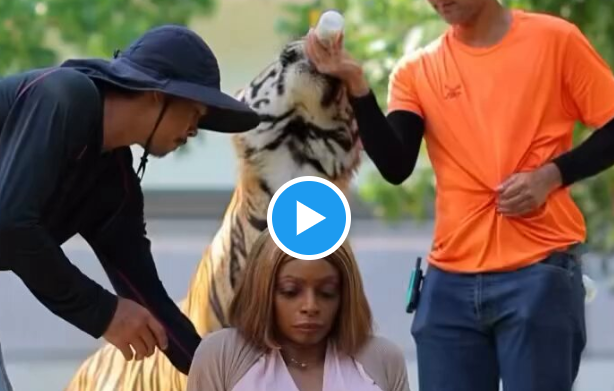
Check out what the men did to arrest the ire of the tiger…

Aunt Brenda has a type of confidence that one might expect from Roman rulers or owners of private islands. Sadly, this self-assurance is often not supported by something known as situational awareness.

Last summer, on our visit to the “Strictly No Touching (We Mean It)” Exotic Animal Sanctuary, Brenda felt her Instagram needed more photos of top predators. While the rest of us appreciated the 500-pound Bengal tiger, Raja, from a safe distance and behind two strong metal barriers, Brenda was preoccupied with her hair and lighting.

The Ambush Begins

“He seems lonely,” Brenda whispered, which is exactly what you want to hear about an animal that could easily eat a car. Before the guide could finish explaining “The Importance of Keeping Your Limbs,” Brenda had already moved right up to the edge of the safety zone.

She wasn’t just after a picture of the tiger. She aimed for a “besties at brunch” vibe. With her back turned to the enclosure, she raised her selfie stick like a weapon and started making a series of high-pitched noises.

“Here, kitty-kitty-kitty! Look over here, Mr. Stripes! Show me a fierce face!”

The Tiger’s Perspective

Raja, who was calmly licking a big block of frozen goat blood, paused. He turned his huge head and focused his golden eyes on Brenda’s bright pink sun hat. In the wild, such a look usually hints at a quick, one-sided interaction. But Raja was used to sanctuary life. He didn’t see a meal; he saw an insult to his pride.

As Brenda leaned back—way too close to the chain-link—to capture the ideal shot, Raja decided to respond. He didn’t roar or leap. Instead, he made a low, vibrating sound and did something really sneaky: he turned away from her.

“Oh, you’re being shy!” Brenda laughed, changing her photo filters. “Don’t be a diva, Raja!”

The Spray of Reality

Just as Brenda pressed the button for what she thought would become a viral sensation, Raja raised his tail. For those not familiar with cat biology, tigers use specific. . . liquid methods to claim their space.

It was a precise move.

With the skill of a power washer, Raja shot a strong spray of tiger musk straight through the fence. It caught the wind perfectly. It didn’t just hit Brenda; it engulfed her. The bright pink hat was the first victim, followed by the silk scarf and then her expensive phone.

The sound Brenda made wasn’t a scream; it was a series of quick gasps, like a balloon losing air. The smell reached the rest of us a moment later—a strong, fermented mix of old gym socks and ammonia that could strip paint off walls.

The Aftermath

The picture we retrieved from the cloud later is an example of unexpected art. In the front, Brenda’s face shows a strong feeling of betrayal. In the back, Raja glances over his shoulder with a proud, toothy smile.

During the four-hour drive home, Brenda was covered in three heavy-duty trash bags in the back of the pickup truck. We offered her a seat inside, but the car seats were too precious to risk. Even now, if someone says “safari,” or if a cat looks at her, Brenda starts to twitch nervously.

However, she did achieve her moment of fame. It turns out that “Woman Gets Power-Washed by Tiger” attracts a lot more attention than “Me and My New Best Friend.”

This Company Pays Engrs $750,000+ A Year to Understand How LLMs Work

0

We analyzed it..,

The $750,000+ salary figure (often totaling over $1 million when including equity) for Anthropic’s Interpretability Engineers reflects a critical pivot in the AI industry. As Large Language Models (LLMs) become more integrated into the global economy, the Black Box problem has shifted from an academic curiosity to a multi-billion-dollar liability.

Here is an analysis of why Anthropic is paying such a massive premium for this specific expertise.


1. The “Black Box” Problem

LLMs are built on billions of parameters. While we know the math behind how they learn, we don’t actually know how they arrive at specific internal concepts. This is known as the Black Box. Anthropic’s focus is on Mechanistic Interpretability—essentially reverse-engineering the neural network to identify which specific neurons or features trigger certain behaviors (like lying, bias, or coding ability).

The Risks of Ignorance:

  • Hallucinations: If you don’t know how a model stores facts, you can’t stop it from making them up.
  • Deceptive Alignment: The fear that a model might learn to “act” safe during testing but harbor harmful intents that trigger later.
  • Safety & Compliance: Regulatory bodies (like the EU AI Act) are increasingly demanding that high-risk AI systems be explainable.

2. Competitive Advantage: Constitutional AI

Anthropic was founded by former OpenAI executives with a specific focus on AI Safety. Their Constitutional AI framework relies on the model following a set of rules (a constitution).

By paying top dollar for engineers who can map the internal thought process of a model, Anthropic gains a competitive edge:

  • Precision Pruning: They can potentially turn off specific harmful behaviors without degrading the rest of the model’s performance.
  • Efficiency: Understanding how a model works allows for more efficient training, as engineers can focus on the parameters that actually matter.

3. The Talent Scarcity (Supply vs. Demand)

The pool of people capable of performing high-level mechanistic interpretability is incredibly small.

FeatureSoftware EngineerInterpretability Engineer
Primary GoalBuild functional applications.Explain the internal math of AI.
SkillsetCoding, Systems, Databases.Linear Algebra, Neuroscience, ML Theory.
RarityHigh (millions of devs).Extremely Low (hundreds of experts).

Export to Sheets

The $750k+ salary isn’t just for coding—it is a “bounty” for rare polymaths who can bridge the gap between high-level mathematics and practical computer science.


4. Institutional Trust as a Product

Anthropic’s primary customers are often large enterprises (via Amazon and Google partnerships) that are terrified of AI PR disasters.

  • A bank won’t use an AI for credit scoring if it can’t explain why it rejected a loan.
  • A hospital won’t use an AI for diagnosis if the reasoning is a mystery.

The Bottom Line: Anthropic isn’t just paying for understanding—they are paying for the legitimacy required to sell AI to the world’s most risk-averse industries. The high salary is an investment in building the Inspectoscope for the most powerful technology of the 21st century.

Source: Gemini

Light-Hearted Community Dance By Local Folks – Video

0

When African men come together to do funny dance…

Why African Men Dancing is the Ultimate Mood Booster

When a group of African men chooses to dance, something special happens. It’s not really about having precise moves; in fact, there may be very few of those. It’s all about the excitement, the unspoken connection, and the joyful spirit that shines through in videos or performances.

If you have been on social media recently, you may have come across clips of African men at various events—be it a wedding in Lagos, a street in Nairobi, or a backyard party in Accra—enjoying themselves. Let’s be honest: you didn’t just scroll by. You paused, watched, and likely smiled.

What makes these videos so engaging?

Let’s explore what makes the African Men’s Dance Circle so special.

  1. It’s Not About Being Perfect; It’s About Being There

In many Western dance scenes, there is a focus on doing everything correctly. You need to follow the steps, keep time, and look impressive. But when African men come together to dance, the atmosphere changes. It focuses less on performing for others and more on enjoying the moment. Someone might stumble, someone might make up a dance step as they go, and another might do a comical version of a dance move—and that’s the beauty of it. It’s genuine, heartfelt, and human.

  1. Shared Language of Music

African cultures have a strong link to rhythm. It pulses in the music, thumps in the drums, and flows in everyday life. When a group of men moves together, that rhythm becomes a connection. It brings everyone together. It doesn’t matter if you are a boss, a student, or a craftsman; when the music starts, you are simply a man, you are part of the music, and you are part of something bigger.

  1. Lovely Display of Friendship

In various cultures, men are often expected to be serious, strong, and reserved. But these dance clips completely challenge those ideas. Seeing a group of men support each other, laugh, joke around, and coordinate their actions shows a beautiful form of male friendship. It highlights that showing feelings, having fun, and being lighthearted are important aspects of being a strong and healthy man. It’s brotherhood at its brightest.

  1. Joyful Energy Element

Let’s face it: life can be tough. We are often overwhelmed with news and difficulties. Watching a video of African men dancing with such pure happiness offers a refreshing break for our minds. Their excitement is infectious. It serves as a reminder that, no matter how hard life may seem, there is always room for music, movement, and laughter.

How to Join the Fun

You don’t need to be an expert dancer to feel this vibe. The next time you are with friends—or even alone in the kitchen—play your favorite Afrobeats song. Don’t stress about looking impressive. Don’t worry about who’s watching. Just enjoy the movement.
The “silly dance” isn’t focused on telling jokes; it’s about expressing yourself. If this results in some awkward dance steps that make others chuckle, that’s just the lively African spirit showing itself.

What is your top “happy” dance experience? Tell us in the comments below, or even better, create your own dance group today!

Celebs’ Sons Remake An Old Movie, Here’s What Happened

0

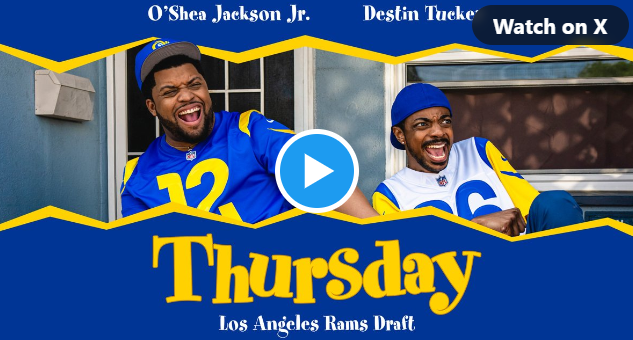
Ice Cube’s Son & Chris Tucker’s son remake Friday for the rams…

Check out my dud script below

Title: FRIDAY: SUPER BOWL SUNDAY (LA EDITION) Characters:

  • O’SHEA JR. (as Craig): Looking exactly like his dad, but with better skincare.
  • DESTIN TUCKER (as Smokey): High energy, wearing a Rams jersey two sizes too big.

[SCENE START]

EXT. SOUTH CENTRAL PORCH – DAY

O’SHEA JR. is sitting in a coordinate-branded lawn chair. He looks out at the street, sighing. DESTIN TUCKER pulls up in a lowrider that is vibrating so hard the side mirror falls off. He hops out, tripping over his own oversized jersey.

DESTIN (Screaming) Wassup, Craig! I mean… O’Shea! Man, you look just like your daddy. It’s creepy, dog. I feel like I owe you twenty dollars just for looking at you!

O’SHEA JR. Man, sit down. You’re making my hairline recede just listening to you.

DESTIN (Sits down, bouncing) You ready for the Rams game? SoFi Stadium, baby! The House that Kroenke built! I got the snacks, I got the spirit, and I got…

(He pulls out a single, crushed bag of Pork Rinds)

O’SHEA JR. That’s it? That’s all you brought for the Super Bowl? We’re supposed to be hosting the whole neighborhood.

DESTIN Man, times is hard! My daddy told me he was gonna give me some money, but then he just started doing high-kicks and shouted “Hee-hee!” and ran into the kitchen. I think he’s still in there!

O’SHEA JR. (Rubbing his temples) You ain’t got no job. You ain’t got nothing to do. I’m trying to watch Matthew Stafford throw a dot, and you’re over here with a bag of skin.

[Suddenly, a massive shadow looms over them. It’s DEEBO’S SON—who is 6’9” and wearing a 49ers jersey.]

DEEBO’S SON That’s a nice jersey, Smokey.

DESTIN (Voice goes up three octaves) Oh, hey, Deebo Jr.! It’s just a starter jersey! It’s not even official! I got it from a guy named Hector at the swap meet!

DEEBO’S SON (Points at O’Shea’s snacks) Whatchu got to eat?

O’SHEA JR. (Stands up, channelng the energy) It’s Sunday, man. Go home. We’re watching the Rams.

DEEBO’S SON Rams? In LA? This is Niners territory.

DESTIN (Whispering to O’Shea) Psst. Give him the pork rinds. He looks hungry and I’m too pretty for a black eye!

O’SHEA JR. No. My daddy told me if I let one more person take my chain or my chips, he’s gonna make me play him in a biopic again. And I can’t do it, Destin! I can’t keep wearing those 90s flannels!

DESTIN (Suddenly brave) Yeah! You heard him! Get out of here, Deebo! Before I call my daddy and he tells you how “You win some, you lose some, but you live… you live to fight another day!”

DEEBO’S SON …What?

DESTIN I don’t know! It sounded cool when the old man said it!

[O’Shea Jr. picks up a brick—but it’s actually just a very heavy, gold-plated Super Bowl trophy.]

O’SHEA JR. You want this? Come get it.

[Deebo’s Son looks at the trophy, looks at O’Shea’s scowl, and remembers what happened to his dad in the original movie.]

DEEBO’S SON Man, forget y’all. I’m going to Buffalo Wild Wings.

[He stomps off.]

DESTIN (Dancing around) YOU GOT KNOCKED OUT! Well, he walked away, but it felt like a knockout! Break yo’ self, Deebo!

O’SHEA JR. (Sitting back down) Sit down, Destin. The game’s starting.

DESTIN (Grabbing the remote) And you know this, MAN!

[FADE OUT as the Rams fight song plays on a kazoo.]

[SCENE END]

Look Through