Home Blog Page 8

Black and White Women Fight Dirty on the Street

0

We have all observed it at least once. It could have been an intense confrontation outside a tavern at 2:00 AM, an aggressive driving episode during your morning journey, or an abrupt, forceful eruption in a densely populated public area. An altercation on the street is raw, disorderly, and nearly invariably disconcerting to observe.

Have you ever examined beyond the flailing arms and the vocal outbursts to contemplate: What causes this to occur? What instigates two (or more) individuals to forsake social etiquette and jeopardize their physical safety—and legal liberty—in a public altercation?

The psychology underlying urban violence is seldom attributable to a singular factor. It is typically a ideal tempest of biology, surroundings, and self-importance. Here is an analysis of the reasons individuals encounter disputes in public spaces.

  1. The Self-Identity Snare and Credibility

In numerous urban altercations, the impetus is not a tangible danger, but an assumed affront. Psychologists frequently reference the honor culture. When an individual perceives that their standing, dignity, or resilience is being questioned in the presence of colleagues, the compulsion to maintain reputation transforms into a psychological necessity. The conflict does not pertain to the original complaint; it revolves around the spectators. The presence of onlookers frequently intensifies a dispute, as neither side wishes to appear as the one who retreated.

  1. The De-escalation Shortfall (Impulsive Regulation)

The majority of us possess an internal safeguard that alerts us, “This is not worth facing incarceration or suffering a concussion.” In an altercation on the street, that safeguard has malfunctioned. This frequently arises from inadequate impulse regulation, which may be intensified by pressure, fatigue, or cognitive distortion. When an individual is functioning in a responsive condition, they forfeit the capacity to conduct a cost-benefit evaluation. They perceive the circumstance as a dual option: strike or be struck.

——

Amazon’s recent commitment to pour $200 billion into AI is one of…

0

If you’re wondering why a retail giant is effectively betting the house on AI, the answer is simple: Amazon isn’t just building a chatbot. They are preparing to become the nervous system of the digital economy.

Here is why this massive, record-breaking investment matters for the future of tech, business, and your daily life.

1. It’s Not Just About Search; It’s About Infrastructure

While competitors like OpenAI or Google often focus on consumer-facing AI (like ChatGPT or Gemini), Amazon has a unique advantage: AWS (Amazon Web Services).

AWS already powers a massive portion of the internet. By dumping $200 billion into AI, Amazon is essentially upgrading the “pipes” of the global digital infrastructure. They are building the data centers, the custom chips (like their Trainium and Inferentia processors), and the cloud capacity that every other company—from startups to Fortune 500s—will need to run their own AI.

The Takeaway: Amazon is positioning itself as the “picks and shovels” provider for the AI gold rush. Even if you don’t use Amazon for shopping, your favorite apps likely run on Amazon’s AI-powered backends.

2. The Reinvention of Retail Intelligence

Amazon became the world’s store by mastering logistics. Now, they are layering AI over every inch of that supply chain.

Imagine a world where Amazon predicts exactly what you need before you even realize you’re out of it. With $200 billion, they are fine-tuning autonomous warehouse robotics, predictive inventory management, and hyper-personalized shopping experiences. This investment is designed to cut costs and speed up delivery times to levels that would be impossible for smaller competitors to match.

3. Turning Alexa into a True Assistant

For years, digital assistants have been… well, limited. We use them to set timers and check the weather.

Amazon’s investment signals a massive shift for Alexa. They are racing to transform their voice assistant into a Generative AI-powered powerhouse that can actually do things for you—like planning entire vacations, negotiating service contracts, or managing complex home automation. By integrating AI deep into the hardware, Amazon aims to turn Alexa from a smart speaker into an indispensable personal agent.

4. The AI Arms Race Is Entering a New Phase

Why $200 billion? Because in the world of AI, scale is the barrier to entry. Training the next generation of Large Language Models (LLMs) requires astronomical amounts of electricity, data, and hardware.

By committing this level of capital, Amazon is sending a clear message to Microsoft, Google, and Meta: We aren’t just here to participate; we are here to define the scale. This ensures that Amazon stays at the front of the pack, forcing the industry to innovate faster and keep prices competitive.

What Does This Mean for You?

For the average consumer and business owner, this investment carries two major implications:

  • Faster, Smarter Services: Expect the tools you use every day—from your grocery delivery app to your enterprise software—to become significantly more intuitive and proactive over the next few years.
  • The “AI-First” Economy: We are moving past the novelty phase of AI. With this much capital backing it, AI will soon become a utility as essential as electricity or high-speed internet.

The Bottom Line

Amazon’s $200 billion isn’t just a spending spree; it’s a strategic fortification. They are betting that the future of business belongs to those who own the infrastructure of intelligence.

As the dust settles, one thing is clear: the AI revolution is no longer coming. With investments of this magnitude, it has officially arrived.

This Video Displays the Majesty of Zhang Sixuan

The Majesty of Zhang Sixuan: A Portrait of Ethereal Elegance

In the ever-evolving landscape of modern aesthetics, certain figures emerge not just as influencers or models, but as embodiment of a specific, transcendent grace. Zhang Sixuan is one such figure. With a presence that feels both timeless and distinctly contemporary, she has captured the attention of audiences worldwide, becoming a symbol of what many describe as “ethereal elegance.”

But what is it about the majesty of Zhang Sixuan that commands such quiet, profound attention? It isn’t merely her striking features—though they are undeniable—but rather the deliberate, almost poetic way she inhabits her own image.

The Art of Stillness

In an era of high-octane social media content, where “more is more” often defines the standard, Zhang Sixuan excels in the art of restraint. Her aesthetic is defined by a serene stillness. Whether she is draped in avant-garde couture or simple, structured minimalism, there is a consistent thread of composure.

To look at her portfolio is to witness a masterclass in poise. Her gaze is rarely performative; instead, it is introspective. This allows the viewer to feel as though they are witnessing a private moment rather than a public production. This sense of intimacy is rare, and it is precisely what gives her work its “majestic” quality.

Bridging Cultures and Aesthetics

Zhang Sixuan possesses the unique ability to navigate the duality of traditional and modern sensibilities. She carries the weight of classical beauty—reminiscent of the delicate, ink-wash paintings of old—while seamlessly integrating the sharp, edgy sensibilities of modern high fashion.

Her signature style often plays with light and shadow, highlighting the architectural lines of her face and the fluidity of her movements. By blending these worlds, she creates a visual language that feels universal. She isn’t just modeling clothes; she is crafting a mood, a sentiment, and a story that transcends geography.

Beyond the Surface

What truly elevates the majesty of Zhang Sixuan is the perception of intelligence behind the aesthetic. There is a “knowing” quality to her work. It suggests that her poise is not a gift, but a cultivated state of being.

For those who follow her journey, she has become an inspiration for the “slow fashion” movement and the appreciation of intentionality. She reminds us that in a noisy world, there is power in being quiet. There is strength in being deliberate. And there is majesty in maintaining one’s grace, regardless of the chaos that might surround us.

Why She Matters

Zhang Sixuan represents a shift in how we consume visual art. We are moving away from the loud and the excessive toward the meaningful and the refined. By prioritizing substance and emotional resonance, she has carved out a niche that is entirely her own.

Whether you are an admirer of fashion, a student of photography, or simply someone who appreciates beauty in its most refined form, the majesty of Zhang Sixuan is impossible to ignore. She serves as a poignant reminder that true style isn’t about what you wear—it’s about the spirit you bring to the space you occupy.

What are your thoughts on the evolving aesthetic of Zhang Sixuan? Does her approach to minimalism resonate with your own style philosophy? Let us know in the comments below.

Hip-Hop Architect Afrika Bambaataa Passes Away at 68

0

The music world is waking up to some heavy news today. Afrika Bambaataa, the “Godfather of Hip-Hop” and the man who basically gave the genre its heartbeat, has passed away at the age of 68.

His lawyer confirmed that Bambaataa died on Thursday, April 9, 2026, in Pennsylvania following a battle with prostate cancer.

Why He Mattered

If you’ve ever danced to a beat that felt like it came from the future, you probably have Bambaataa to thank. Here’s a quick look at why he’s a legend:

  • The “Planet Rock” Revolution: In 1982, he dropped “Planet Rock,” a track that changed everything by blending hip-hop with electronic sounds (shoutout to Kraftwerk). It paved the way for electro, house, and even modern techno.
  • Universal Zulu Nation: He didn’t just make music; he built a movement. He founded the Zulu Nation to turn street gang energy into something positive—focusing on “Peace, Love, Unity, and Having Fun.”
  • The Holy Trinity: Alongside Grandmaster Flash and DJ Kool Herc, Bambaataa is widely considered one of the three founding fathers who birthed hip-hop culture in the Bronx.

A Complicated Legacy

While his musical impact is undeniable, the later years of his life were clouded by serious controversy. Since 2016, several men came forward with allegations of sexual abuse dating back to the ’80s and ’90s. Just last year, he lost a civil case regarding these allegations after a default judgment.

Because of this, the reaction to his passing is deeply mixed. Many are mourning the loss of a sonic visionary, while others feel his legacy is permanently tarnished by those allegations.

The Bottom Line: Whether you’re spinning his records or reflecting on the darker chapters of his history, there’s no denying that the landscape of modern music wouldn’t look the same without him.

Rest in peace to a man who truly saw the “Planet” as his “Rock.” 🎤🎧

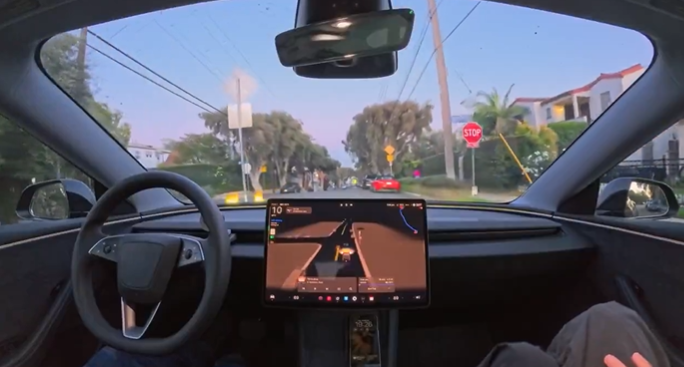
How safe is it When Tesla Car Drives Itself Around?

0

Look, I’ll be the first to admit that watching a steering wheel spin itself while you’re cruising at 70 mph is both the coolest and most nerve-wracking thing you can experience in 2026.

I’ve spent a lot of time behind the wheel (well, behind the wheel) of a Tesla, and if you’re asking me how safe it really is, the answer is a very loud: “It depends on how much you’re actually paying attention.”

The Superhuman Debate

If you listen to Elon Musk, he’ll tell you that Full Self-Driving (FSD) is on the verge of being 10x safer than a human. And honestly, on a clear highway with well-marked lanes, I get it.

The car has eight cameras that never blink, never get sleepy, and don’t get distracted by a spicy notification on their phone.

But here’s the reality check: while Tesla’s safety reports show fewer crashes per mile when FSD is engaged, critics point out that we usually turn FSD on during easy driving, like highways.

We tend to take over when things get weird—like a construction zone with hand-drawn signs or a rainy night in a city with faded lane lines.

The Uncanny Valley of Safety

The real danger isn’t necessarily the software failing; it’s human nature.

  • The Lull: When the car drives perfectly for 45 minutes, your brain naturally checks out. You start looking at the scenery or thinking about what’s for dinner.
  • The Glitch: That’s exactly when the car might pull a phantom brake (slamming the brakes for no reason) or misinterpret a complex intersection.
  • The Handover: Trying to go from relaxed passenger to emergency driver in 0.5 seconds is incredibly hard.

My Personal Take

Is it safe? As a driver-assist tool, it’s incredible. It takes the fatigue out of long road trips and acts as a second set of eyes that can catch a pedestrian or a sudden stop faster than I can.

But is it “set it and forget it” safe? Absolutely not. The tech is still in that awkward teenage phase. It’s brilliant one minute and baffling the next. Just this year, users have been reporting “waffling” where the car hesitates during turns or gets confused by new traffic patterns.

The bottom line: I trust my Tesla to help me drive, but I don’t trust it to drive for me. Until the day I can actually take a nap in the back seat—which, despite the name “Full Self-Driving,” we are nowhere near—I’m keeping my hands hovering over that wheel.

Stay safe out there, and remember: the cameras are good, but they don’t have your survival instinct.

What about you? Are you ready to trust a computer with your commute, or does the idea of a “software glitch” at highway speeds keep you up at night?

Launch of This Unique Portable Player Makes Me Remember The Golden Era of Music

0

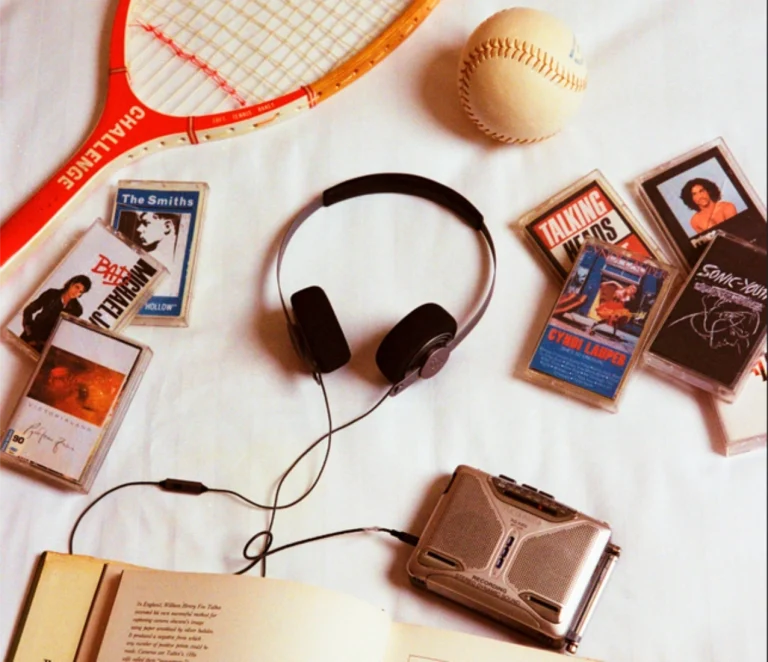
Let’s be honest: there exists a distinct form of enchantment in the click-clack of a plastic cassette case that a Spotify algorithm simply cannot replicate. Gadhouse has recently released their latest Miko Portable Cassette Player, and observing that transparent casing genuinely felt like a direct assault on my fond memories. It serves as a complete portal to the era of mixtapes, radio recordings, and the immense perseverance needed to be a music enthusiast.

Aesthetics of the Mechanical

During the late 1980s and early 1990s, music was tangible. You didn’t merely select a track; you possessed it. You sensed the burden of the tape, you toiled over the inscribed J-cards, and you existed in perpetual dread of a deck consuming your cherished album.

The Miko embodies that essence flawlessly with its transparent enclosure. It evokes memories of a time when technology was not concealed behind polished, uninspiring gray metal. We desired to observe the mechanisms in motion! Watching those two spools rotate is strangely soothing—it serves as a visual indication that music is a tangible journey from start to finish.

Connecting the Divide (Without the Complicated Cables)

What is genuinely remarkable about the Miko is that it does not compel us to reside completely in the past. While I greatly appreciate the “comfort” of analog, I do not particularly yearn for the experience of disentangling headphone cords from my backpack zipper every five minutes.

The presence of Bluetooth 5.3 in this device is a significant advancement. It signifies that I can insert an antique cassette I discovered at a second-hand shop and enjoy it through my contemporary noise-reducing headphones. It represents the Golden Age of audio, yet devoid of the Golden Age drawbacks.

Reasons Behind Our Continued Fascination

Why are we acquiring cassette players in 2026? It’s not concerning the utmost fidelity—let’s be truthful, digital surpasses in that regard. It pertains to purposefulness.

By engaging with a recording, you are dedicating yourself to the creator’s perspective. You are not changing tracks every thirty seconds due to your focus being depleted. You are seated with the collection. You are perceiving that subtle hiss between tracks that resembles the sigh of the apparatus.

Concluding Reflections

Regardless of whether you are a member of Generation X seeking to recapture your youth or a representative of Generation Z experiencing the tangible delight of physical media for the first time, the Miko appears to be a success. It is fashionable, slightly defiant, and a significant gesture of contempt towards the “unseen” essence of contemporary streaming.

At this time, if you would be so kind, I must depart to locate a No. 2 pencil and determine if I still recall how to manually rewind a cassette.

Does this evocative exploration encourage you to rummage through your antiquated containers, or are you exclusively a digital listener?

A Community in Shock After Family Stabbing…

0

A quiet, tree-lined neighborhood in Woodland Hills is reeling this week following a harrowing incident that has left a local family shattered and a community searching for answers.

Authorities confirmed that a Woodland Hills couple was stabbed in their home late this week, allegedly by their own son. The incident, which unfolded in a residential area typically known for its peaceful atmosphere, has sent shock-waves through the San Fernando Valley.

The Details of the Incident

According to reports from the Los Angeles Police Department, officers were called to the scene following reports of a domestic disturbance. Upon arrival, they discovered the parents suffering from multiple stab wounds.

First responders quickly transported both victims to a nearby hospital, where they remain under medical care. While details regarding their specific conditions are being closely guarded by local officials out of respect for the family’s privacy, the gravity of the situation is clear.

The couple’s son fled shortly after the incident. As the investigation continues, police have yet to release a motive, leaving neighbors and the public to grapple with the senselessness of such an act.

A Community in Mourning

For those who live on the block, the news feels surreal. Woodland Hills is often characterized by its tight-knit sense of community and family-oriented lifestyle. When violence erupts within the sanctuary of a home, it forces a collective moment of reflection.

“You see these things on the news, but you never imagine it happening right across the street,” one neighbor shared, wishing to remain anonymous.

“They were just a normal family. It’s absolutely heartbreaking.”

The Unspoken Struggle of Mental Health

While the legal proceedings are only in the preliminary stages, incidents of this nature often spark a broader, necessary conversation about mental health awareness and the resources available to families in crisis.

In many domestic violence and family crisis cases, there are often warning signs that go unnoticed or unaddressed due to the stigma surrounding mental health struggles. Experts emphasize that early intervention and accessible support systems are crucial, though they acknowledge that even the most prepared families can find themselves blindsided by sudden outbursts of violence.

Moving Forward

As the investigation proceeds, the family will undoubtedly need time and privacy to heal. The Woodland Hills community has already begun to show its support, with neighbors dropping off meals and offering condolences to the extended family members currently navigating this traumatic event.

This story serves as a somber reminder of the fragility of safety. As we wait for more information from law enforcement, our thoughts remain with the victims and their loved ones as they face the difficult road to recovery.

Lakewood: Bomb Threat Sparks Major Scare at St. Anthony Hospital

0

It was a tense afternoon for patients and staff at St. Anthony Hospital in Lakewood after an anonymous caller claimed they were going to blow up the facility.

The drama started when a woman called the Lakewood hospital, but the threat actually had a weird twist: she was reportedly targeting the hospital’s sister location, St. Anthony Summit Hospital in Frisco, because she was upset over the mental health care she’d received.

What Went Down

Once the call came in, Lakewood police didn’t take any chances. They immediately coordinated with Summit County deputies, who swarmed the Frisco campus.

Here’s how it played out:

  • The Sweep: K-9 units and deputies scoured the hospital and the surrounding grounds for anything suspicious.
  • The Wait: For a few hours, everyone was on high alert while authorities tried to figure out if the threat was the real deal.
  • The Oops: The same woman eventually called 911 again, admitting she’d made the whole thing up and claiming she didn’t even have the means to build a bomb.

The Aftermath

Despite the confession, the investigation isn’t over. While police say there is no ongoing threat to the public or the patients, they are still trying to track down the caller. Apparently, she told dispatchers she isn’t even living in Colorado anymore, which has made finding her a bit of a cat-and-mouse game.

For now, things are back to business as usual at both hospitals, but it’s a stiff reminder of how one phone call can turn a quiet Tuesday into a full-blown emergency response.


Bottom Line: No explosives were found, and everyone is safe. If you’re heading to St. Anthony for an appointment, you’re good to go—just expect a little extra chatter in the waiting room about the wild afternoon they just had.

If You Haven’t Seen “Girls” Here’s Your Chance to Get a Sneak-peak

0

It is difficult to comprehend, yet it has been more than ten years since the world was first introduced to Hannah Horvath and her intricate, tumultuous, and painfully relatable group of companions. On April 15, 2012, HBO debuted Girls, and television—particularly the portrayal of the feminine experience in one’s twenties—changed irrevocably.

Crafted by and featuring Lena Dunham, Girls did not attempt to be refined. It did not attempt to be uplifting like Sex and the City, nor did it endeavor to be stylish. It was unrefined, unsettling, and frequently embarrassing, which is precisely why it resonated so profoundly.

The Expression of an Era?

The program’s promotion notably designated it the voice of a generation, a slogan that transformed into both a symbol of distinction and a catalyst for critique.

When we initially engaged that April evening, we were not observing a lavish depiction of New York City; we were witnessing four young women grappling with their identities while contending with the overwhelming burden of their own self-centeredness.

Hannah, Marnie, Jessa, and Shoshanna were not consistently appealing. Indeed, they were frequently exasperating, self-important, and inclined to make remarkably poor decisions in their lives. However, they were genuine.

They were traversing the post-graduate emptiness where the real world appeared to be a snare, and the aspiration of becoming a writer, an artist, or merely a competent adult seemed endlessly unattainable.

The Significance of Its Continued Relevance

Reflecting on the past, the influence of Girls is indisputable. It opened the door for a surge of tragic-comedies and dramatic comedies that emphasized character imperfections rather than narrative convenience. It ignited ceaseless discussions regarding entitlement, physical appearance, and contemporary relationships.

More significantly, it expressed the particular, subtle apprehensions associated with turning 24.

The economic dilemma: The truth of uncompensated internships and housing costs that exceeded your budget.

The dynamics of companionship evolve: Drifting away from individuals you believed would remain your friends indefinitely.
The occupational uncertainty: The recognition that you may not be the exceptional individual you were led to believe during your academic years.

The Heritage

Regardless of whether you appreciated the series or found it profoundly frustrating, “Girls” compelled you to engage. It was unreserved in its vulnerability—both in a literal and metaphorical sense.

It encapsulated the chaotic, unrefined visual style of 2012, well before social media transformed into the theatrical showcase that it has become today.

As we reflect on its April 15 launch, we are not merely recalling a performance; we are commemorating a significant moment in history. Girls served as a reflection that did not consistently reveal our finest qualities, but it did unveil our true selves, for better or for worse.

Did you view Girls when it initially debuted? What is your assessment of its relevance today? Please share your thoughts in the comments below!

Girls is a critically acclaimed television series that premiered on HBO on April 15, 2012.

In One Minute, This Guy Explains How to Activate the Super Conscious Mind

0

Popular beliefs on how to activate the super conscious mind

Have you ever encountered an abrupt “aha! ” moment that felt as though it emerged from a source beyond your usual thought process? Or possibly a moment of complete creative immersion where time appeared to evaporate?

Numerous philosophers, psychologists, and spiritual educators contend that these phenomena are not mere coincidences; rather, they represent insights into the Super-conscious Mind.

While the unconscious encompasses our routines and recollections, and the conscious mind manages our rational cognition, the super-conscious is frequently characterized as the realm of intuition, elevated intellect, and universal inter-connectedness. It is the locus of brilliance, deep imagination, and spiritual enlightenment.

However, how do you transcend the ordinary and activate this elevated capability? Here are the most prevalent concepts and methods for stimulating the super-conscious mind.

The Strength of Tranquility (Contemplation & Quietude)

The primary obstacle to the super-conscious is the “monkey mind”—the incessant flow of dialogue that muddles our conscious perception. Common opinion suggests that one cannot perceive the “quiet, subtle whisper” of the super-conscious if one is perpetually generating noise in their own mind.

The Technique: Profound meditation is the benchmark in this context. Through the exercise of quiet observation, you acquire the ability to disengage from your thoughts. When the conscious mind is subdued, the super-conscious is provided the opportunity to surface.

  1. Utilizing the Alpha and Theta States

Science and spiritual disciplines frequently intersect when examining brainwave conditions. The superconscious is often linked to Alpha (calm, imaginative) and Theta (intense meditation, surreal) states.

The Method: Approaches such as Yoga Nidra, rhythmic respiration (Pranayama), or even neuro-feedback training are utilized to direct the brain into these reduced-frequency states while the body stays alert. In these conditions, the rational, analytical evaluator of the conscious mind becomes inactive, permitting the “transfer” of information to occur.

  1. Intentional Visualization and Creativity

Albert Einstein notably stated, “Creativity is of greater significance than understanding. ” Numerous individuals who explore the superconscious assert that imagination serves as the medium of the elevated intellect.

The Technique: Imaginative visualization entails comprehensive, sensory-enriched cognitive activities. By vividly envisioning an objective, a resolution to a challenge, or an optimal state of existence, you are fundamentally conditioning the super-conscious to connect the divide between your present circumstances and that aspiration.

  1. The “Incubation” Approach

Have you ever observed that your most exceptional concepts arise while in the shower or during a stroll? This phenomenon is known as the Incubation Period. The higher consciousness frequently necessitates that you cease exerting yourself so intensely.

The Procedure: Initially, fill your conscious mind with the information or the issue you are endeavoring to resolve. Subsequently—and this is the pivotal aspect—release entirely. Participate in a leisurely pastime, rest, or immerse yourself in the outdoors. This indicates to the conscious intellect to yield, enabling the super-conscious to analyze the information and provide a resolution at an unexpected moment.

  1. Composing as a Medium: Spontaneous Writing

Journaling is prevalent; however, automatic writing is a distinct method designed to circumvent the analytical mind.

The Exercise: Initiate a timer and permit your hand to compose uninterruptedly without pausing to verify grammar, orthography, or coherence. By composing at a quicker pace than your conscious mind is capable of processing, you frequently discover that you achieve a flow state in which the words manifesting on the page originate from a more profound, intuitive reservoir.

  1. The Discipline of Detachment (Non-Attachment)

This may be the most challenging, yet most crucial, phase. Self-centered ambition (“I must be exceptionally intelligent,” or “I have to resolve this issue”) generates stress and obstruction.

The Approach: Embracing a mindset of relinquishment. By fostering confidence that the solutions are inherently within you, you diminish the emotional strain that obstructs the super-conscious. It is the distinction between compelling a door to open and merely rotating the knob.

A Concluding Remark: Uniformity is Crucial

Engaging the super-conscious is infrequently a singular occurrence; it represents a transformation in way of living. It involves cultivating a cognitive atmosphere that is sufficiently tranquil, sufficiently open, and adequately receptive to acknowledge the revelations that are perpetually pressing at the boundaries of your consciousness.

Commence modestly. Allocate ten minutes to experience tranquility today. Establish a purpose. Subsequently, seek the subtle, unforeseen prompts of instinct. You may be astonished by the extent of knowledge that lies in wait just below the surface.

Are you presently engaging in any of these techniques? Which one has afforded you the greatest insight? Please share your thoughts in the comments section below!

Look Through